Animals & keeping · Nature & wildlife
Fishkeeping
Almost every beginner failure in fishkeeping has the same cause, and it is not the fish. A new tank has no biological filter, so the ammonia the fish produce has nowhere to go — and the shop that sold you the tank, the fish and the water conditioner on the same afternoon has set you up to find that out the hard way. Understanding one process solves most of it.
Also known as aquariums, aquarium keeping, tropical fish.
Fishkeeping is the maintenance of a small, closed aquatic ecosystem. The fish are the visible part; the actual work is keeping the water chemistry stable, and almost everything that goes wrong is a water problem presenting as a fish problem.
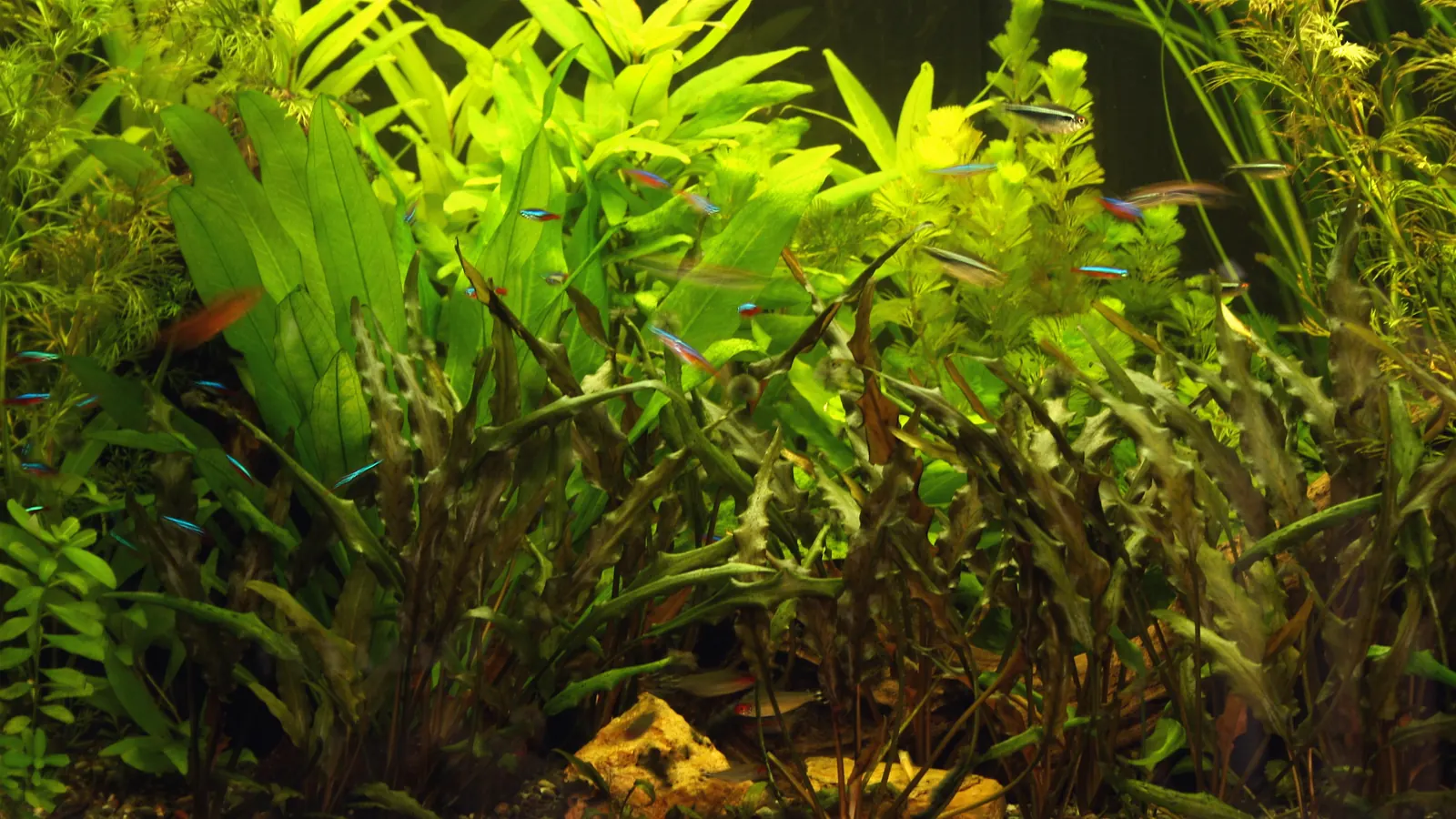
The hobby divides into branches that share very little beyond a glass box. Community freshwater — a mixed tank of small tropical fish — is where most people start and is the cheapest and most forgiving. Coldwater needs no heater and is generally larger than beginners expect, because goldfish grow. Planted and aquascaped tanks treat the plants as the point and the fish as accents. Biotope tanks recreate a specific stretch of a specific river. Marine adds substantially more expense, equipment and precision, and reef adds coral, which is a considerably higher bar again.
What people underestimate is that this is animal keeping. A tank is a commitment measured in years — many community fish live five to ten, and some considerably longer — with a weekly routine that does not pause because you are busy.
HobbyHQ covers fishkeeping at the level of the hobby: what it involves, what it costs, what the branches are, and the handful of concepts that determine whether a beginner succeeds. Species-by-species care, water chemistry in depth, disease diagnosis and equipment specification are a specialist body of knowledge, and this page is deliberately an orientation rather than a substitute for one.
Step 1: Buy a bigger tank than you were planning to
The counterintuitive rule of the hobby: larger tanks are easier. A bigger volume dilutes mistakes, holds temperature steadily and swings in chemistry more slowly. A 100-litre tank is genuinely more forgiving than a 30-litre one, and costs perhaps 30 per cent more to set up.
You will know it worked when: Small errors stop being fatal.
Step 2: Buy a liquid test kit, not strips
You cannot manage what you cannot see, and ammonia, nitrite and nitrate are all invisible. Liquid reagent kits are considerably more accurate than paper strips and cost around £25 for hundreds of tests. This is not optional equipment.
You will know it worked when: You know what is happening in the water rather than guessing from the fish.
Step 3: Cycle the tank before buying any fish
Three to six weeks with no animals in it. This is the step everybody wants to skip and the one that decides the outcome.
You will know it worked when: A working biological filter.
Step 4: Research the fish before you fall in love with them
Adult size, temperament, whether they shoal, water parameters and compatibility. The common failures are predictable: common plecos reaching 45cm, goldfish needing far more volume than a bowl, and single specimens of species that are miserable in fewer than six.
You will know it worked when: A stocking list that will still work in two years.
Step 5: Add fish slowly, a few at a time
Each addition increases the bioload and the bacteria need days to catch up. Two or three weeks between additions, testing as you go.
You will know it worked when: The filter keeps pace with the fish.
Fishkeeping equipment is sold as a starter kit and is almost never the right starter kit. The two things that determine whether a tank succeeds — volume and filtration — are the two things kits economise on, because they are the two things a display box cannot show.
What actually matters, in order:
- The tank, and specifically its volume — Bigger is easier. This is the single most counterintuitive thing about the hobby and the most important: a larger volume of water dilutes waste, buffers temperature and pH swings, and gives you hours to notice a problem rather than minutes. A 60-litre tank is a reasonable first tank; a 20-litre desktop cube is an expert’s tank sold to beginners. Footprint matters more than height for most fish, and a full tank weighs roughly a kilo per litre plus substrate, so check what it is standing on.
- A filter, rated generously — The filter is not primarily a strainer — it is the surface on which the bacteria that process ammonia live. Rated turnover of four to six times the tank volume per hour is a sensible starting point. Never wash filter media in tap water: chlorine kills the colony you spent a month growing. Rinse it in old tank water at a water change, and only when flow drops.
- A liquid test kit — Ammonia, nitrite, nitrate and pH. Strips are convenient and imprecise at exactly the concentrations that matter. Without a test kit you cannot cycle a tank, cannot diagnose a problem, and are keeping fish by guesswork — this is the purchase people skip and then regret.
- A heater with a separate thermometer — For tropical species. The thermometer is not redundant: a failed heater stuck on is one of the few faults that kills an entire tank in a day, and the dial on the heater tells you what it was asked to do, not what it did.
- Dechlorinator — A few pounds, and required for every water change on mains water. Chlorine and chloramine are added to make water safe for people and are lethal to fish and to the filter bacteria.
- A siphon and a bucket — The gravel vacuum is the actual maintenance tool of the hobby. A bucket used for the tank should be used for nothing else, ever — detergent residue is fatal.
- Lighting and substrate — Lower priority than the list above unless you want live plants, in which case they become the constraint. Ordinary gravel or sand is fine for a fish-first tank.
What you can skip at the start: an air pump, unless a specific fish or filter needs one; chemical pH adjusters, which cause more instability than they cure; and almost every bottled additive other than dechlorinator. Stability beats optimisation, and most additives are sold against a problem that good water changes solve.
- Work it out — Aquarium volume and water change
If you learn one thing before buying anything, learn this. It explains most beginner fish deaths and it is the reason experienced keepers seem strangely uninterested in which fish you want.
Fish excrete ammonia, which is highly toxic to them even at low concentrations. In an established tank, colonies of bacteria living in the filter media and on surfaces convert ammonia to nitrite — also toxic — and a second population converts nitrite to nitrate, which is far less harmful and is removed by water changes and taken up by plants.
A brand-new tank has none of those bacteria. Water conditioner does not supply them and a filter does not contain them out of the box. Establishing the colonies takes weeks, and until they exist, ammonia accumulates. Adding a full stock of fish to a new tank means they live in their own waste while the bacteria slowly catch up — which is what "new tank syndrome" describes, and it is the commonest way a beginner’s fish die.
The two ways round it:
Step 1: Fishless cycling — the better method
Set the tank up fully, then dose ammonia — as pure household ammonia with no additives, or by letting a small amount of fish food decay — and test the water regularly. Ammonia rises, then falls as nitrite rises, then nitrite falls as nitrate appears. When the tank processes a dose of ammonia to zero ammonia and zero nitrite within about 24 hours, it is cycled.
You will know it worked when: A filter that can handle waste before any animal depends on it. Typically three to six weeks.
Step 2: Seeding from an established tank
Mature filter media, substrate or a sponge from a healthy established tank carries the bacteria with it and can shorten the process from weeks to days. This is what the hobby’s social culture is genuinely useful for — a local club or a keeper on a forum will usually hand over a squeezed sponge for nothing.
You will know it worked when: A substantial head start, and the reason it is worth knowing another fishkeeper.
Step 1: Cycling the tank
Establishing the bacteria that process ammonia before fish arrive. This is not a step to rush and it is the single commonest cause of early deaths.
You will know it worked when: Ammonia and nitrite read zero while nitrate rises.
Step 2: A stable community
Water changes on a schedule, feeding less than feels right, and stocking within the tank's actual capacity.
You will know it worked when: Parameters stay steady for a month without intervention.
Step 3: Reading the tank rather than testing it
Recognising trouble from fish behaviour, algae patterns and plant growth before a test kit tells you.
You will know it worked when: You notice a problem before it becomes visible damage.
Step 4: The plateau
Algae, universally. It is a symptom of an imbalance in light, nutrients and plant mass rather than a thing to kill, and people stall by treating it as an enemy.
Step 5: Where it branches
Planted aquascaping, breeding, species specialisation, or larger and more demanding systems. Breeding changes the hobby from keeping to husbandry.
Step 6: When to upgrade
Bigger is genuinely easier — larger volumes are more stable. The upgrade trigger is usually stocking ambition rather than dissatisfaction.
- Partial water change — Typically 20–30 per cent weekly, matched for temperature and dechlorinated. This is the core of maintenance: it removes nitrate and replenishes trace minerals. Never change all the water — you would remove the bacterial population and the stability with it.
- Siphon the substrate — Done at the same time as the water change with a gravel vacuum, pulling out the detritus that would otherwise decay.
- Rinse filter media in tank water, occasionally — And never under the tap. Chlorine kills the bacterial colony living in the media, which is the entire filter. Rinse gently in the water you have just siphoned out.
- Test — Weekly at first, less often once a tank is established and stable. Ammonia and nitrite should read zero; a reading above zero in an established tank means something has gone wrong and is worth investigating immediately.
- Feed less than you want to — Overfeeding is the second commonest beginner error after skipping the cycle. Uneaten food decays into ammonia. What the fish clear in a couple of minutes, once or twice a day, is enough — and most fish are perfectly well on a fast day each week.
- Adding fish on day one — The defining error. Buying the tank and the fish in the same transaction is normal shop practice and it is why so many first tanks fail.
- Starting too small — Nano tanks are advanced, not beginner. Small volumes swing fast in temperature and chemistry.
- Overstocking — The old inch-per-gallon rule is a poor guide — it ignores body mass, waste production and territory. Research adult size and behaviour instead.
- Rinsing the filter under the tap — Kills the bacteria and effectively un-cycles the tank. The most common way an established tank suddenly crashes.
- Overfeeding — Decaying food is a direct ammonia source, and fish are much better at appearing hungry than at needing food.
- Buying a goldfish for a bowl — Goldfish are large, long-lived, heavy waste producers and coldwater. A bowl is not a home for one and never was.
- Treating symptoms rather than water — Medicating a sick fish while the underlying water quality problem continues treats the wrong thing. Test the water first, always.
- Changing everything at once — Stability matters more than perfection. Large sudden corrections stress fish more than the parameter you were correcting.
Fishkeeping splits first by water chemistry and then by intent, and the first split is the one that decides cost, difficulty and which advice applies to you. Freshwater and marine are close to different hobbies sharing a word: the equipment, the livestock supply chain, the failure modes and the running costs all differ substantially.
- Community freshwater — Mixed peaceful species in a planted or decorated tank. The default entry point, the cheapest, and the most forgiving of the mistakes everybody makes in the first six months.
- Species and biotope tanks — One species, or a set that would genuinely occur together in one place, with matching water parameters and hardscape. More restraint and more research, and generally healthier fish for it.
- Planted tanks and aquascaping — Where the plants are the point and the fish are the accent. It becomes its own discipline quickly — carbon dioxide injection, substrate, lighting and trimming schedules — and is published here as a separate subject.
- Coldwater and ponds — Goldfish properly housed, native temperate species, and outdoor ponds. Cheaper to run, larger volumes, and a seasonal rhythm rather than a constant one.
- Marine, fish-only — Salt water without corals. Higher equipment cost, salinity to manage, and a much less forgiving margin when something goes wrong, because the livestock is more expensive and often less robust.
- Reef — Corals as well as fish, and the most demanding branch by a wide margin — lighting, flow, and a list of water parameters that must stay stable rather than merely acceptable. Also the most spectacular, which is why people attempt it too early.
- Breeding — A cross-cutting specialism rather than a tank type. Livebearers to start, then egg-layers, then the species with genuine difficulty. It changes what the hobby is about: you end up managing several tanks and thinking in generations.
- Cheapest branch to start
- Community freshwaterAnd the one where a mistake costs the least, which matters more than it sounds.
- Biggest jump in cost
- Freshwater to marineRoughly a doubling before livestock, and the running costs rise too.
- Where the difficulty actually is
- Stability, not complexityReef keeping is hard because parameters must stay steady, not because any one of them is obscure.
- The branch that changes the hobby
- BreedingIt turns one tank into several and shifts the interest from display to husbandry.
- Still deciding — Fishkeeping vs aquascaping
- Cycling
- Establishing the bacterial colonies that convert ammonia to nitrite and nitrite to nitrate. The prerequisite for keeping fish.
- New tank syndrome
- Fish deaths caused by ammonia and nitrite accumulating in an uncycled tank.
- Bioload
- The total waste burden the inhabitants place on the filter. Determined by body mass and feeding rather than by fish count.
- Substrate
- The gravel, sand or aquasoil on the tank floor. Also a major site of bacterial colonisation.
- Dechlorinatoralso: water conditioner
- A conditioner that neutralises chlorine and chloramine in tap water. Required for every water change.
- Water change
- Replacing a proportion of tank water with fresh dechlorinated water. The main mechanism for removing nitrate.
- Nano tank
- Broadly, under about 40 litres. Harder to keep stable than a larger tank despite being marketed at beginners.
- Quarantine tankalso: hospital tank
- A separate bare tank for observing or treating new or sick fish without exposing the main population.
- Aquascaping
- The design discipline of arranging plants, rock and wood as a composition. A competitive activity in its own right.
- Reef tank
- A marine aquarium keeping live coral as well as fish. Substantially more demanding in equipment, lighting and stability.
- GH and KH
- General hardness and carbonate hardness — measures of dissolved minerals. KH buffers against sudden pH swings, which is why it matters more than pH itself.
Ornamental fishkeeping is ancient in China, where goldfish were selectively bred from wild carp over roughly a thousand years, and the practice reached Japan and later Europe as a courtly one.
The hobby as we would recognise it is Victorian and depended on two things arriving together: cheap plate glass, and an idea. In 1841 Nathaniel Bagshaw Ward and later Robert Warington worked out that plants and animals could be balanced in a sealed glass container so that the system sustained itself, and the word "aquarium" entered general use after Philip Henry Gosse’s writing in the 1850s. The Great Exhibition and the opening of a public aquarium at London Zoo turned it into a craze.
What made the modern tropical hobby possible was electricity — reliable heaters and filters, then air pumps — followed by air freight, which from the mid-twentieth century made it possible to move live fish from South America and Southeast Asia to European shops. Almost everything a beginner buys today is downstream of those two developments.
- Why did all my fish die in the first month?
- Almost certainly ammonia poisoning in an uncycled tank. A new tank has no bacterial colony to process fish waste, so ammonia and then nitrite accumulate to toxic levels over the first few weeks. It is not bad luck and it is not usually disease — it is a process problem, and the fix is to cycle the tank without fish in it before stocking. Shops sell tanks and fish together, which is why this happens so consistently.
- How big a tank should I start with?
- Bigger than feels sensible. Somewhere around 60–120 litres is a much easier first tank than a 20-litre nano, because a larger volume dilutes mistakes and holds temperature and chemistry steady. Small tanks are marketed at beginners and are genuinely harder to keep alive. The extra cost of going larger is far smaller than the cost of restocking.
- How long does cycling take?
- Three to six weeks fishless, depending on temperature and how you seed it. Adding mature filter media from an established tank can cut it to days, which is the single best reason to know another fishkeeper or join a local club. You know it is done when a dose of ammonia is processed to zero ammonia and zero nitrite within about a day.
- Is a goldfish bowl cruel?
- Yes, and not marginally. Goldfish are coldwater fish that grow large, live for many years and produce a great deal of waste. A bowl provides no filtration, very little oxygen exchange at the surface, and a volume that makes stable water chemistry impossible. They need a substantial filtered tank or a pond. The bowl is an artefact of Victorian display, not a home.
- How much time does it take each week?
- A minute or two a day for feeding and a look, plus thirty to sixty minutes a week for a water change and substrate siphon. The real commitment is that it does not pause: the tank needs its water change in a busy week, and the animals in it depend on that being true for the several years they will live.
- Freshwater or marine to start?
- Freshwater, without much hesitation. Marine tanks cost roughly two to three times as much to set up, require more equipment and considerably tighter stability, and are far less tolerant of a mistake. The concepts transfer directly, so a year of freshwater is the cheapest possible preparation for a reef tank if that is where you are heading.
Guides
Longer answers to questions this page can only summarise.
Within this activity
Disciplines, variants and techniques that sit inside it.
Disciplines
- Aquascaping — Designing planted underwater landscapes in an aquarium, competitively.
- Planted aquariums — Growing aquatic plants as the point of the tank, balancing light, carbon and nutrients.
If you like this
Each of these is here for a stated reason, not because it is also a hobby.
Similar to
- Hydroponics — Both are small managed water systems kept indoors, both are diagnosed with a pH meter and a habit of writing things down, and both punish neglect faster than the soil-and-air versions of the same interest.
- Houseplants — The same weekly-tending, slowly-improving relationship with something alive indoors, for a fraction of the equipment cost.
- Reptile keeping — The other indoor vivarium hobby: the same discipline of controlling an artificial environment precisely, with heat and humidity in place of water chemistry.
Progresses to
- Aquascaping — The design discipline that grows out of fishkeeping once the water is under control — planted layout as the point, with the fish as accents.
Goes well with
- Rockpooling — Seeing the animals in the wild changes how you set up a tank, and it costs nothing.
Substantial
Last reviewed 2026-08-13. Cost, time and difficulty figures on this page are HobbyHQ estimates — see how we work. Something here wrong or out of date? Tell us.