Water sports · Outdoor & adventure
Sea fishing
Sea fishing is the most accessible angling there is: no rod licence for sea species in England and Wales, thousands of miles of coast open to anybody, and a workable outfit for well under £100. It is also the branch that kills people, almost always in one specific way. This page is an orientation — the three ways of fishing the sea, what the tackle categories are for, how conditions decide everything, and the safety that is not optional.
Also known as saltwater fishing, shore fishing, beach fishing, sea angling.
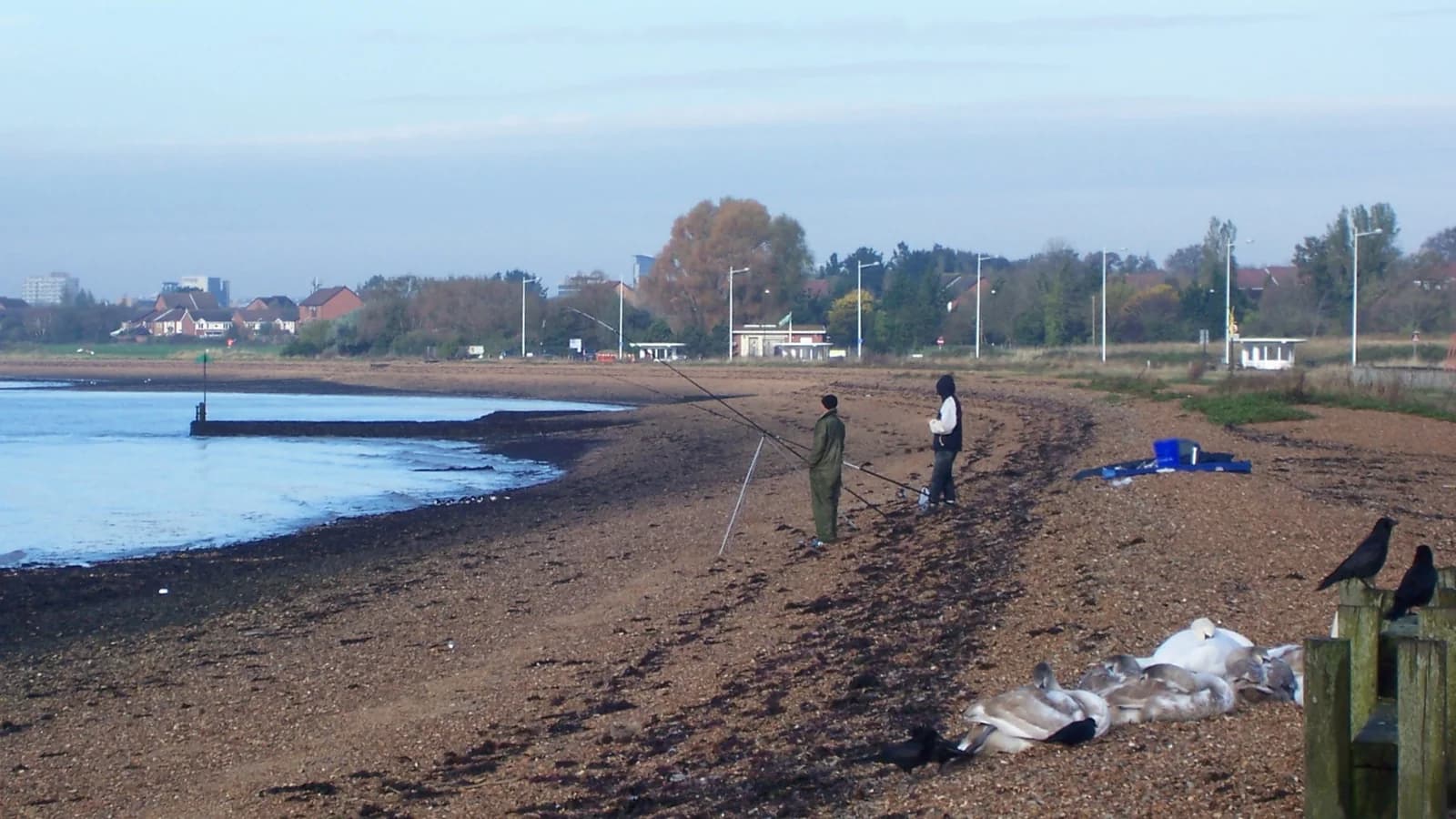
Sea fishing splits into three, and they are different sports sharing a name. Shore fishing covers beach, rock and estuary — free, endlessly available, and the branch where conditions matter most. Pier and harbour fishing is shore fishing with railings, lighting and other people, and is much the best place to start. Boat fishing reaches marks you cannot cast to, usually from a charter with a skipper who knows where the fish are, which removes most of the guesswork and most of the cost of learning it yourself.
The single biggest difference from freshwater angling is that the water moves and takes the fish with it. Tide state, sea state, wind direction and time of day interact, and the same mark can be excellent two hours either side of high water and empty in between. Learning a mark means learning its tides, which is why local knowledge is worth more here than tackle is.
This page is an orientation rather than a manual. Species identification, mark-by-mark tactics and rig depth are covered properly by FishingHQ; what follows is the shape of the sport, the categories of tackle and why they exist, and the safety and legal position, which is the part a general reference should own.
- Rod licence for sea species
- Not required in England and Wales
- Best place to start
- A pier
- What decides the session
- Tide, not tackle
- The risk that matters
- Being swept off, or cut off
The first stage is catching anything at all, from a pier, on bought bait. The second is learning one mark properly — its tides, its seasons, what comes in when — which is worth more than any amount of tackle and is the point at which blank sessions become informative rather than discouraging.
After that the sport branches by method rather than by skill level. Lure fishing is mobile, light and increasingly popular, and it is a different sport from bait fishing in everything but the water. Beach fishing is about distance casting and holding bottom, and is the most technical branch of shore angling. Boat fishing opens species and depths the shore cannot reach, and charter trips make it accessible without owning anything. Match fishing exists and is competitive at club and national level.
The one skill that repays learning at any stage is bait — digging it, keeping it, presenting it fresh. It is the least glamorous part of the sport and it separates people who catch consistently from people who catch occasionally.
Step 1: Buy a light spinning outfit, not a beachcaster
A 9–10ft spinning rod, a fixed-spool reel and braid or mono is £60–£120 and covers piers, harbours and estuaries. It is easier to cast, far easier to carry, and much more likely to catch something on a first trip than a beachcaster you cannot yet load properly.
You will know it worked when: You own tackle you can carry in one hand and cast without instruction.
Step 2: Go to a pier, in daylight, at the top of the tide
Railings, other anglers, no risk of being cut off, and somebody who will tell you what is being caught. This is the single best first venue in the sport and there is no reason to start anywhere else.
You will know it worked when: You have fished somewhere safe and asked somebody a question.
Step 3: Buy fresh bait locally and ask what is working
The tackle shop nearest the water is the best information source in the sport, and it is free. What is being caught, on what, and at what state of tide changes weekly and nobody publishes it.
You will know it worked when: You are fishing the right bait for the week rather than the right bait in general.
Step 4: Learn the tide before you learn anything else
Get a tide table, work out high and low water for your mark, and fish the two hours either side of high water to begin with. Tide state explains more about a blank session than tackle ever will.
You will know it worked when: You can say what the tide was doing when you caught, or did not.
Step 5: Only then consider a beach or a rock mark
And take somebody who knows it. Beaches need casting distance and rock marks need judgement about swell that cannot be acquired from a page — this is the point at which the sport stops being self-teachable.
You will know it worked when: You go with somebody the first time, not alone.
- Go deeper — Planning a shore session around the tide
- A beachcaster, for distance and weight — A long rod, typically around 12ft, built to throw several ounces of lead a long way and to hold bottom in a running tide. This is the classic beach and pier outfit and it is what most beginners picture. It is also considerably more rod than a harbour needs.
- A spinning or lure rod, for mobility — Shorter, lighter, and used with artificial lures rather than bait. A completely different way of fishing — you walk and cast rather than wait — and much the more engaging option for many people. Cheaper to start and far easier to carry.
- A boat rod, which is short on purpose — Stubby and powerful, because you are fishing straight down rather than casting out and the fight happens vertically. Charter boats almost always have tackle to hire, which is the sensible way to try it.
- The reel, and the salt problem — Fixed-spool for most beginners, multiplier for distance casting once you can use one. What actually matters is that it is built for salt water and that you rinse it afterwards — salt destroys tackle faster than use does, and this is the maintenance habit that separates gear lasting a decade from gear lasting a season.
- Rigs and terminal tackle — The business end: hooks, weights, beads, swivels and the arrangement that holds them. Shop-bought rigs are entirely fine to begin with and tying your own is cheaper, more satisfying, and the point at which most people start engaging with why a rig is shaped the way it is.
- Bait, which is most of the skill — Frozen, fresh or dug yourself, and matching it to the species and the venue is a larger part of success than tackle is. FishingHQ covers this properly; the orientation-level point is that fresh generally beats frozen and local generally beats imported.
- Clothing, which is not optional — The purchase people skip and the one that decides whether a winter session is three hours or thirty minutes. Waterproof, windproof, layered, and a head torch with spare batteries.
The rest, in rough order of how often it bites:
- Cold, which ends more sessions than anything — A winter beach at night is a serious exposure proposition and the wind off the sea is the part people underestimate. Layers, genuine waterproofs and a flask are equipment rather than comfort.
- Hooks, under tension, in the dark — The commonest actual injury. A beachcaster loaded with several ounces of lead stores real energy, and a snapped line sends it back at you. Barbless where you can, a head torch always, and nobody standing behind you when you cast.
- Weever fish and spined species — Several British sea fish carry venomous spines and a weever sting is genuinely painful. Handle unfamiliar fish with a cloth or a grip, and know that hot water is the standard first response.
- Slippery everything — Weed on rock, algae on concrete, and a harbour wall after rain. Studded boots on rock are not an affectation.
- Tell somebody where you are going — The single cheapest safety measure in the sport, and the one that turns a missing person into a located one.
- Mark
- A specific fishing spot. Local and closely held — a mark is knowledge as much as a place, and its value is in knowing which state of tide it fishes.
- Beachcaster
- A long, powerful shore rod built to cast heavy leads a long way and hold bottom in a tide. The classic beach outfit and more rod than a harbour needs.
- Spring and neap tides
- The fortnightly cycle of tidal range. Springs move more water further and faster and change both the fishing and the safety margin; neaps are gentler on both counts.
- Slack water
- The period around high or low tide when the flow is minimal. Some marks fish well then and many do not, which is why tide state is the first thing anybody asks.
- Terminal tackle
- Everything at the business end of the line — hooks, weights, swivels, beads. Distinct from rod, reel and line.
- Trace
- The length of line carrying the hook, often of heavier or wire construction where the species has teeth.
- Fixed-spool and multiplier
- The two reel types. Fixed-spool is easier and what nearly everybody starts with; multipliers cast further in trained hands and produce spectacular tangles in untrained ones.
- IFCAalso: inshore fisheries and conservation authority
- An inshore fisheries and conservation authority — the regional bodies that set many of the local rules on sizes, seasons and permitted methods. The reason "check locally" is not a hedge.
- Starting with a beachcaster — Too much rod, hard to cast, heavy to carry, and it will catch less on a pier than a £60 spinning outfit. Buy the beachcaster when a beach is what you want to fish.
- Fishing a rock mark alone, or in a swell — The way this sport kills people. There is no tackle solution and no skill that substitutes for not being there.
- Ignoring the tide — Both halves of it: the fishing half, where tide state explains most blank sessions, and the safety half, where it is the thing that cuts people off.
- Not rinsing tackle — Salt destroys reels faster than use does. Five minutes with fresh water is the difference between a decade and a season.
- Keeping fish without checking the rules — Minimum sizes and bag limits are real, locally variable and revised. If in doubt, return it.
- Buying tackle instead of asking questions — The local tackle shop knows what is being caught this week and will tell you for free. No amount of equipment substitutes for that.
- Dressing for the car park — The wind off the sea and six hours of standing still are a different proposition from the walk from the car.
A blank session at sea is normal and is not evidence of anything, which is the first thing worth saying because most beginners conclude the opposite. What is diagnosable is the difference between a session where nothing was ever going to happen, a session where the tackle was working against you, and a session where something was wrong with the way it was set up.
Read each entry as symptom → likely class → what you can safely check → what to do next. This section names classes rather than prescribing rigs — rig design is a whole subject in itself and is not one this page covers. Where the honest answer is a local one, it says so, because sea fishing is more locally variable than almost anything else in this catalogue.
- Class 1
- Conditions and timing — yours to observe, not to change
- Class 2
- Tackle and terminal setup — yours
- Class 3
- The mark — local knowledge
- Class 4
- Safety — stop, and it outranks everything above
- No bites at all, for hours — Conditions and timing, usually. The sea is not a pond and most marks fish on a state of tide rather than a time of day. Check what you can count: what the tide was doing, whether the water was coloured or gin-clear, whether there was any sea running at all. A flat calm bright afternoon on a clean beach is a hard session everywhere, and the answer is when you went rather than what you tied on.
- Bites you never connect with — Terminal setup. Small fish and crabs both produce this and they are told apart by what comes back: stripped bait with the hook intact is usually small mouths, and a hook returned bare and clean is often crabs. Hook size relative to the bait and to what is actually there is the thing to change, and a local tackle shop will tell you what is there this month faster than any page.
- Everything you cast keeps snagging and you are losing gear — The mark. Rough, kelpy and rocky ground eats terminal tackle and it is not a fault. Weak links and rotten-bottom setups exist precisely for this and are standard practice on rough ground. If you are losing a rig every cast on what looked like clean sand, you are probably not where you thought you were — ask locally rather than persevering.
- The line keeps tangling in the air — Setup, then casting. Check the cheap things first: a trace longer than you can control, a shock leader knot that is too bulky, hooks not properly clipped down. All three are checkable in a minute on the ground. If those are ruled out it becomes a casting question, which is taught in person and is not something this page attempts.
- Your reel is grinding, or the drag is jerky — Tackle, and it is salt. Saltwater destroys reels that are not rinsed, and it does it quietly over a season rather than in one session. Rinse with fresh water after every trip — not immerse — and dry it. A reel that already grinds needs a service rather than more oil, and a cheap reel that has been through a winter unrinsed is usually beyond it.
- You cannot reach the fish — Possibly nothing. Distance is the most over-emphasised thing in shore fishing and a great many species feed inside twenty metres, particularly in coloured water and after dark. Before buying a longer rod, try fishing closer in on the same mark. If distance genuinely is the constraint at a specific mark, that is local knowledge rather than a general truth.
- You caught something and do not know if you may keep it — Rules, and it is your responsibility rather than the sea’s. Minimum sizes, closed seasons and species restrictions apply and they vary by area and by species. The rules section of this page is where that sits. If in any doubt, return it — an unnecessary release costs nothing and the alternative is an offence.
- The sea is bigger than it was when you arrived — Stop. This outranks every other entry on this page. Being cut off by the tide, and being caught by a swell on a rock mark, are the two ways this hobby kills people, and both develop faster than they look. Leave, from the landward side, before it becomes a decision. Nothing on this list is worth staying for, and if you see anybody in difficulty on the coast, call 999 and ask for the Coastguard.
The habit worth building is to write down what the sea was doing. State of tide, wind, water clarity, and what came back on the hook. Four lines a session, and after a dozen sessions you have something no page can give you, which is what your marks actually do — because the useful knowledge in this sport is local and is built rather than read.
The overview says sea fishing splits into three and that they are different sports sharing a name. This is what that means in practice — what each one costs, what it needs from you, and which one you should start with. The tackle categories themselves are in the equipment section; this is about access, conditions and commitment.
- Pier and harbour — start here — Shore fishing with railings, lighting, a flat surface and other people who have done it before. Free or a few pounds, reachable without a car, safe enough to take a child to, and forgiving of turning up at the wrong state of tide. The fish are usually smaller and the setting is less romantic, and neither of those matters at all when the objective is finding out whether you like it. Almost everybody who stays with this sport started here, and the people who did not mostly wasted a season.
- Shore fishing — beach, rock and estuary — The branch with the most variety and by far the widest range of consequence. Beach fishing is long casts, patience and reading a featureless-looking surface for the features under it. Estuary fishing is tide-driven and often the most productive water in the country. Rock fishing reaches the best marks and is where people are killed, which is why the safety section is written around it rather than around the tackle. Free, endlessly available, and the branch where conditions matter most and local knowledge is worth more than equipment.
- Boat fishing — reaching what you cannot cast to — Usually a charter with a skipper who already knows the marks, which is the fastest way to catch fish and to learn what the ground under the water looks like. £50–£90 for a day on a shared charter with tackle often included, which is more than a day on a pier and considerably less than learning the same marks yourself. Own-boat fishing is a different commitment entirely and is a boating hobby with fishing attached rather than the other way round. Seasickness is the variable nobody plans for and it decides the day.
- Kayak fishing — a fourth thing, and not a cheaper boat — Growing quickly and worth naming because people arrive at it assuming it is boat fishing on a budget. It is a paddlesport with fishing added, the safety model is the paddlesport one, and it should be entered from that side rather than from this one.
- What this page does not cover, and where it lives — Species, marks, rigs, casting and tactics belong to FishingHQ, which owns sea angling in depth. That is a deliberate product boundary rather than a gap — the registered decision is recorded and the reasoning is that duplicating it here would mean doing the same job twice and worse. What stays here is the shape of the sport, the tide, the law and the safety.
- Still deciding — Sea fishing vs coarse fishing
Sea angling is unusually open for a sport with so much local knowledge in it. Piers are sociable and beginners are generally helped rather than tolerated; the tackle shop is a genuine institution and functions as the information layer the internet has not replaced, because what matters is what is happening this week at this mark.
The etiquette is mostly about space and lines. Ask before setting up close to somebody, do not cast across another angler's line, and give way to whoever was there first — on a crowded pier the whole thing works because everybody is casting in roughly the same direction and nobody is walking behind a rod being loaded.
The conservation culture has shifted markedly. Catch and release is now normal among recreational sea anglers for species under pressure, size limits are treated as a floor rather than a target by most, and there is an active recreational-angling voice in fisheries policy that did not exist a generation ago. The old habit of filling a bucket has largely gone, and the sport is better for it.
- Do I need a licence to fish in the sea?
- Not for sea species in England and Wales. The Environment Agency rod licence is defined by species — it is required for salmon, trout, freshwater fish, smelt and eel — and sea species are not in that list. Two caveats matter. An estuary can put you in freshwater jurisdiction without any obvious boundary, so know which water you are in. And no licence does not mean no rules: minimum sizes, seasons and bag limits apply to a number of sea species, set nationally and by local inshore fisheries authorities, and they are revised. Check the current position before keeping anything.
- What should I buy first?
- A light spinning outfit rather than a beachcaster — a 9–10ft rod and a fixed-spool reel for £60–£120. It is easier to cast, easy to carry, and much more likely to catch something on a first trip from a pier or a harbour. The beachcaster is the right purchase when a beach is specifically what you want to fish, which is a decision you can make later and more cheaply once you know.
- Where should I go for my first session?
- A pier, in daylight, around high water. Railings, other anglers to ask, lighting, no possibility of being cut off by the tide, and frequently parking nearby. It removes every one of the risks that make this sport dangerous while keeping everything that makes it enjoyable, and there is no good reason to start anywhere else.
- How dangerous is it really?
- The sport as most people do it — pier, harbour, gently shelving beach — is very safe. The danger is concentrated in two situations. Rock marks in any swell kill anglers every year, and the mitigation is not going rather than any technique. Being cut off by a rising tide is the other, and HM Coastguard is explicit that rapidly rising water can trap people "often with little or no warning and no easy escape route". Know your exits before you go down, check tide times before you leave home, tell somebody where you are, and carry a means of calling for help. In an emergency, 999 and ask for the Coastguard.
- How is this different from what FishingHQ covers?
- This page is an orientation to the whole sport — the three ways of fishing the sea, what the tackle categories are for, how tides and conditions work, and the safety and legal position. FishingHQ goes into species, marks, rigs and tactics at a depth a general reference should not attempt, and duplicating it here would mean doing the same job worse. If you want to know what shape the sport is, this is the page; if you want to know which rig for smoothhound over mixed ground, it is not.
- When is the best time to go?
- Tide state matters more than season for most marks, and the two hours either side of high water is the standard starting assumption. Beyond that it is genuinely local — the same beach can be excellent in October and empty in June, and the only reliable source is the tackle shop nearest the water. Sea fishing does run all year, which is one of its real advantages, though winter sessions demand clothing that most beginners underestimate.
If you like this
Each of these is here for a stated reason, not because it is also a hobby.
Similar to
- Angling — The freshwater half of the same sport. The tackle vocabulary transfers almost completely and the licensing, the venues and the tides do not.
- Fly fishing — A different method on different water, and saltwater fly fishing is the bridge — increasingly popular for bass and mullet from the same marks.
Goes well with
- Birdwatching — Hours standing still on a shoreline at dawn is the same posture from either hobby, and estuaries reward both at the same states of tide.
- Yacht cruising — A boat reaches marks the shore cannot, and a great many cruisers fish while they are out there.
- Foraging — The same shore at the same low tide, and the same need to know which local rules apply before taking anything home.
Shares equipment with
- Wild swimming — The same tide tables, the same cold-water competence and the same coastguard number. People who read the sea for one tend to read it for the other.
Sources for this section
- Coastal safety (opens in a new tab) — HM Coastguard (Maritime and Coastguard Agency) · Institutional · read — supports the claim
- Know the risks in and beside the water (opens in a new tab) — Royal National Lifeboat Institution · Institutional · corroborated indirectly
- Rod fishing licences (opens in a new tab) — UK Government (GOV.UK) · Governing body · read — supports the claim
Comprehensive
Last reviewed 2026-08-16. Cost, time and difficulty figures on this page are HobbyHQ estimates — see how we work. Something here wrong or out of date? Tell us.