Games & puzzles · Writing & language · Social & community
Game mastering
Almost every guide to this is written for one specific game and assumes you already run games well. The skill underneath is system-neutral and learnable: how much to prepare and of what kind, how to keep a scene moving, what to do when the players go somewhere you did not write, and how to run a table where five adults want five different things from the evening. This page is about that, and it names no rules from any published game.
Also known as dungeon mastering, gm, dm, running a campaign, running rpgs, games master, referee.
Game mastering is a discipline of Tabletop roleplaying — Playing is turning up and inhabiting one character; this is the separate craft of running the game for everybody else — preparation, pacing, improvisation and managing a table of adults with different appetites.
One person at the table is not playing a character. They describe the situation, play everybody the players meet, decide what the rules say when it is unclear, and keep the evening moving. The role has different names in different games — game master, dungeon master, referee, keeper, narrator — and the job is substantially the same in all of them.
The common misunderstanding is that this makes you the author and the players the audience. It does not. The nearest accurate comparison is a combination of a host, a referee and an improvising actor: you supply a situation and everybody discovers together what happens in it. A game where the outcome was decided in advance is a story being read out, and players can tell within twenty minutes.
What makes it a craft rather than a chore is that it is genuinely difficult in an interesting way. You are holding a fictional situation, a rules system, five people’s attention and the pacing of three hours simultaneously, in real time, while being fair. Almost nobody is good at it immediately and almost everybody improves markedly in the first year.
- Session length
- Two to four hoursThree is the commonest and the one most groups sustain.
- Preparation time
- Thirty minutes to two hoursAnd the ratio matters far more than the total — see below.
- The hard part
- Improvising when the plan is goneWhich happens in most sessions, and is the point rather than a failure.
- What you need
- A free system, dice and a notebookEverything else is convenience.
The shortest honest route from wanting to do this to having done it:
Step 1: Pick a short, published one-shot
Written to run in a single session, in a rules-light system. Using somebody else’s adventure for a first game removes half the variables and is what almost every experienced game master recommends and almost no beginner does.
You will know it worked when: A session you did not have to invent.
Step 2: Read it twice and take one page of notes
Once for the shape, once for the details. The one page is what you actually run from — names, who wants what, the four rules you will need. Running from a booklet means losing your place in front of people.
You will know it worked when: A single sheet you can glance at.
Step 3: Tell the players it is your first time
Every group is generous about this and nobody expects a polished session. It also gives you permission to pause, look something up and rule quickly, which is the single most useful thing a beginner can have.
You will know it worked when: A table that is on your side.
Step 4: Spend ten minutes on a session zero anyway
Even for a one-shot. What kind of game this is, what nobody wants in it, and how long you are playing for. Ten minutes here prevents most of what goes wrong later.
You will know it worked when: Agreed expectations rather than assumed ones.
Step 5: Start the game at the interesting moment
Not at the tavern, not at the introductions — open with something already happening. The first five minutes set whether the table leans in, and a strong opening is the one thing worth scripting.
You will know it worked when: A session with momentum from the start.
Step 6: Ask two questions afterwards
"Which bit dragged?" and "what did you want more of?" Both get useful answers. "Did you enjoy it?" gets politeness.
You will know it worked when: Something specific to do differently next time.
A session zero is a conversation before the game starts about what everybody wants from it, and it is the highest-value hour in the whole hobby. It is also the thing most groups skip, and most of the campaigns that collapse in month three collapse over something a session zero would have surfaced in ten minutes.
What it covers is unglamorous: how often you will play and for how long, what happens when somebody cannot make it, what kind of game this is meant to be, how much combat against how much talking, whether characters can be at odds with each other, and what nobody wants in the fiction.
That last item has a set of named tools built for it, and it is worth knowing that they exist and who made them. Lines and veils, from Ron Edwards, asks a group to agree what will not appear in play at all and what may exist but happens off-screen. The X-card, from John Stavropoulos, is a non-verbal way for anybody to remove or skip content mid-scene with no explanation required. The Script Change toolbox, from Beau Jágr Sheldon, offers a fuller set of rewind, pause and fast-forward controls. Several of these are collected in the TTRPG Safety Toolkit curated by Kienna Shaw and Lauren Bryant-Monk.
These are worth using without ceremony. The usual objection — that they will be used constantly and ruin the game — does not survive contact with actual tables, where they are used rarely and mostly by people who would otherwise have quietly stopped coming.
The unglamorous agreements that prevent most problems:
- Scheduling, honestly — Fortnightly that happens beats weekly that does not. The commonest cause of a dead campaign is a calendar, not a story.
- What happens to an absent player’s character — Decided in advance, so it is not renegotiated at eight o’clock on a Tuesday with four people waiting.
- Phones and side conversations — Worth naming once rather than resenting silently for a year.
- Whether it is a campaign or a series of sessions — Different commitments. A group that thought it was one and got the other is a group with a resentment.
- How the group handles disagreement about a ruling — Agreeing in advance that the game master rules now and the group discusses later removes almost every table argument.
There is a permanent shortage of people willing to run games, and it is the single most useful fact for anybody considering it. A competent, reliable game master who turns up and runs a decent session will never struggle to find players, which inverts the usual difficulty of starting a social hobby.
Where groups form: local game shops with notice boards and open tables, university and workplace societies, conventions, library and community sessions which are increasingly common, and a very large online scene. Online play through a virtual tabletop is a mature format rather than a substitute — it solves scheduling and geography, and for a lot of adults it is the only way the hobby happens at all.
The etiquette that matters is mostly about the fact that you are hosting rather than performing. Start on time, finish on time, remember what the players did last week, and do not punish somebody for a choice you did not anticipate. The community norm that has shifted most in the last decade is around content and comfort: the safety tools described above have gone from unusual to unremarkable at most tables, and a group that treats them as an imposition is telling you something useful about itself.
- The one-shot — A complete story in a single session. The best possible place to learn: preparation is bounded, you find out within three hours whether it worked, and nothing has to survive to next month. Anybody starting should run several before attempting a campaign.
- The short campaign — Six to twelve sessions with an ending planned from the start. Long enough for characters to develop and short enough to finish, which is why a growing number of groups prefer it to the open-ended alternative.
- The open campaign — The traditional shape: it runs until it stops. Rewarding, and the format most likely to end by fizzling out rather than by concluding.
- Episodic play — A stable cast and self-contained sessions, so absences do not matter. Enormously practical for adults and unfashionable for no good reason.
- The open table — A pool of players, whoever turns up plays, the world persists. Solves scheduling almost completely and asks a different kind of preparation.
- Convention and organised play — Running for strangers to a time limit. The fastest way to improve, because four hours with people who owe you nothing removes every crutch.
- Still deciding — Running a game vs playing in one
- Still deciding — Game development vs game mastering
In rough order of how much difference each makes:
- Run more sessions — By a wide margin. This is a real-time skill and there is no substitute for hours at the table.
- Run for strangers — A convention slot or a public game. Four hours with people who owe you nothing exposes every habit a friendly group forgives.
- Ask for specific feedback — "Which bit dragged?" gets a useful answer. "Did you enjoy it?" never does.
- Play in somebody else’s game — Watching a different game master work is the fastest way to notice techniques you do not have, and the experience of being a player is itself instructive.
- Run a system unlike your usual one — A game built around improvisation teaches different muscles from one built around tactical combat. Both transfer.
- Cut your preparation in half — A deliberately underprepared session forces the improvisation skills that preparation lets you avoid, and most people discover they are better at it than they feared.
The complete list is shorter than the hobby’s shelves suggest:
- A rules system — Several genuinely good ones are free, and a rules-light system is easier to run than a heavy one because there is less to adjudicate under pressure. This is the one decision worth making deliberately rather than by default.
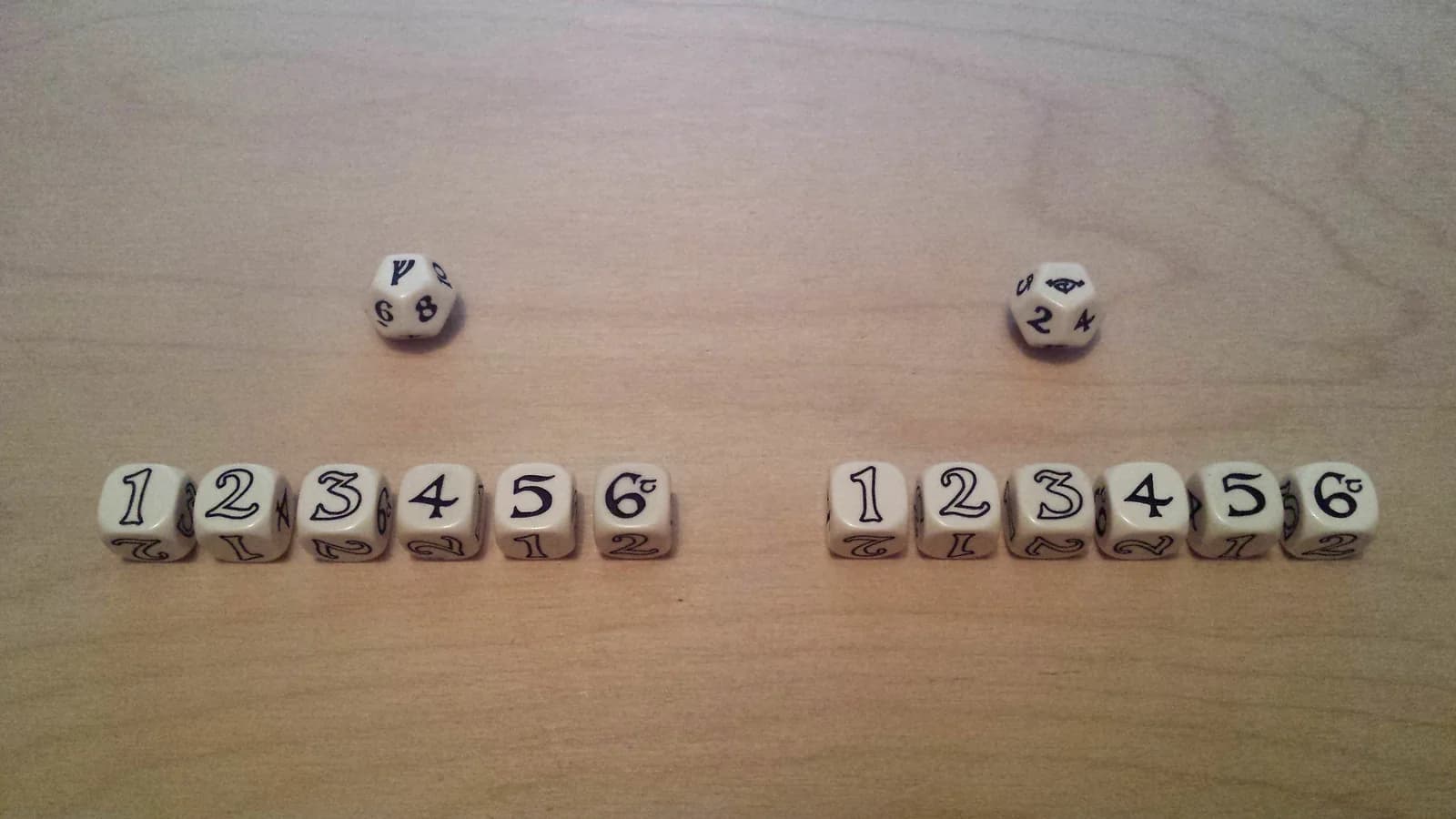
- Dice, or a dice roller — £5–£15 for a set, or nothing at all online. Dice are a collecting habit rather than a requirement, and every group has somebody with spares.
- A notebook and something to write with — For what the players invent — the tavern they named, the cousin they mentioned. Using those later is the highest-value note-taking in the craft.
- A screen, optionally — A physical or notional barrier for notes and hidden rolls. Some game masters find it essential and some find it a wall between them and the table; it is genuinely a matter of preference rather than a tool.
- A virtual tabletop, for online play — £0–£60 a year. Solves scheduling and geography, and for many groups it is the only reason the game happens at all.
- Not miniatures, at first — A significant expense that only pays off if your group prefers a map to description. Find out which they are before buying an army.
- Work it out — Session time budget
The single most useful idea in this craft is that preparation has two kinds, and one of them is almost always wasted.
Prepared outcomes are what you expect to happen: the players will search the study, find the letter, and go to the docks. This is the kind beginners write, it takes hours, and it is thrown away the moment a player does something else — which they will, because they are not reading your notes.
Prepared situations are what is true regardless of what anybody does: who wants what, what is where, what happens if nobody intervenes. This survives everything, because it does not assume a route through it. A page of situation is worth ten pages of outcome, and it is quicker to write.
That distinction is why experienced game masters often prepare less and run better sessions. They are not improvising more; they are preparing the things improvisation needs.
What is worth having written down before a session:
- A handful of names — The single most common thing to be caught without. Twenty names on a list, crossed off as used, removes the most frequent stumble in the job.
- Who wants what — For every faction and significant character, one line: what they are trying to get, and what they will do about it. This generates plot indefinitely without you planning any.
- Three to five interesting situations — Not scenes with outcomes — situations with tension already in them. A locked room with two people who both need to be somewhere else is a situation; "the players find the key" is an outcome.
- A strong opening — The one thing worth scripting. Starting well buys twenty minutes of goodwill and stops the session drifting into logistics.
- The rules you will actually need — One page, printed. Not the rulebook — the four or five procedures this session will use.
- Somewhere for what the players invent — They will name a tavern, invent a cousin, decide their character has a rival. Writing those down and using them later is the highest-value note-taking in the craft.
What is generally not worth preparing: dialogue, room-by-room descriptions of places the players may not visit, contingency branches for choices they may not make, and anything that only works if they do a specific thing. All four are the shape of prepared outcomes, and all four are why some people find preparation exhausting.
Most of the craft that shows at the table is pacing — knowing when a scene is finished and being willing to end it. The commonest failure among new game masters is not a lack of ideas but a reluctance to cut, so scenes run twenty minutes past their point while everybody waits politely.
The techniques that do the most work:
- Start scenes late and end them early — Open at the moment something is at stake rather than at the walk to the door, and cut as soon as the outcome is settled. Borrowed from screenwriting, and it fixes more pacing problems than anything else.
- Say yes, or say yes but — When a player proposes something reasonable, let it work. Refusal teaches a table to stop proposing, and a table that has stopped proposing is one you now have to entertain single-handed.
- Ask the players questions — "Why does this place frighten you?" hands the work to somebody else and generates material you could not have written. It is the single cheapest improvisation technique there is.
- Fail forward — A failed attempt should change the situation rather than stop it. "You do not find it" ends a scene; "you find it, and the noise brings somebody" continues one.
- Give every player a spotlight — Deliberately, and roughly evenly. Quiet players are usually not disengaged — they are waiting for a gap that a louder table never leaves.
- Describe, then hand over — Two or three sentences and then a question. Long description is where a table’s attention goes to die, and the fix is to stop talking sooner than feels natural.
- Do not roll unless failure is interesting — If nothing changes when they fail, do not ask for a roll. Half the dead air in a session is dice rolled for outcomes that were never in doubt.
The other half of running a table is rules adjudication, and the useful principle is that consistency matters more than correctness. Make a ruling quickly, say that you will check afterwards, and move on. Stopping a session to read a rulebook costs more than being wrong for twenty minutes, and a game master who rules confidently and revises later is far easier to play with than one who is always right eventually.
- Preparing outcomes instead of situations — Hours of work discarded the moment a player turns left. The most common and most demoralising error in the craft.
- Starting with a long campaign — A first attempt that has to survive a year, run by somebody who has never run a session. Run one-shots first.
- Talking too much — Three paragraphs of description while five people wait. Two or three sentences, then a question.
- Protecting the plot — Steering players back to what you wrote. They notice, and the reasonable response is to stop trying to affect anything.
- Stopping the game to look up rules — Rule quickly, check afterwards. Consistency beats correctness at the table.
- Skipping session zero — Then discovering in month three that half the table wanted a different game.
- Running for a group that is not working — The job is hard enough with people who want to be there. A campaign that ends cleanly is better than one that decays.
- Assuming silence is engagement — Quiet players are usually waiting for a gap. Ask them directly and the game improves immediately.
Almost every table problem has a structural cause rather than a personality one, and treating it structurally works far more often:
| What you notice | Usual cause | What tends to help |
|---|---|---|
| The session drifts and nothing happens | No pressure in the situation — nobody wants anything urgently | Give somebody offstage a goal and a deadline. Situations generate plot; plots do not. |
| Players will not engage with the hook | The hook needs them to care about something they were not consulted about | Ask what their characters want and hang the next hook off that instead. |
| One player dominates every scene | No deliberate spotlight rotation, and a louder person filling the vacuum | Address other players by name and ask them directly. Structural, not confrontational. |
| Combat takes the entire evening | Fights with no clock and no objective beyond winning | Give every fight a reason to end early — a goal, a timer, a consequence for taking too long. |
| People stop turning up | Scheduling, almost always. Rarely the game | Move to a format that survives absence, or a shorter commitment. Ask before assuming it was the story. |
| You dread preparing | Preparing outcomes, or preparing for a group that is not enjoying it | Cut preparation to one page of situation. If the dread persists, the group is the problem. |
| Players argue with rulings | No agreement about how disagreement is handled | Rule now, discuss after. Agree it once, out of session. |
| The campaign has no momentum | It has been running long enough to have no shape | Name an ending and aim at it. Most open campaigns improve enormously the moment they acquire a horizon. |
- Game masteralso: GM, DM, referee, keeper
- The participant who runs the game rather than playing one character. Called different things by different systems — dungeon master, referee, keeper, narrator — for the same job.
- Session zero
- A meeting before play begins to agree what the game is, how often it runs, and what everybody does and does not want in it.
- One-shot
- A complete game in a single session, with characters usually made for it and discarded afterwards.
- Sandbox
- A game where a situation and a place are prepared and the players choose what to do, as against a prepared sequence of events.
- Railroading
- Forcing the game along a predetermined path regardless of player choice. Universally used as a criticism.
- Theatre of the mind
- Running scenes, including fights, through description alone rather than on a map with tokens.
- Lines and veils
- An agreement about content: lines are things that will not appear at all, veils are things that may exist but happen off-screen. Devised by Ron Edwards.
- X-card
- A non-verbal signal any participant can use to have content removed or skipped, with no explanation required. Devised by John Stavropoulos.
- Fail forward
- Resolving a failed attempt by changing the situation rather than by stopping it, so a bad roll moves the game rather than stalling it.
- Spotlight
- The share of attention a given player is getting. Managing it deliberately is a core part of the job.
- Prep
- Everything done before a session. The useful distinction is between preparing situations, which survives play, and preparing outcomes, which does not.
- Open table
- A persistent game with a pool of players where whoever is available that week plays. A structural answer to adult scheduling.
The role emerged out of tabletop wargaming. The Strong National Museum of Play, which holds a substantial archive of the material, records that in the 1970s the wargamers Gary Gygax and Dave Arneson added the concept of roleplaying to the strategy games they were already playing — and the figure who adjudicates, describes and plays everybody else came out of the referee role that miniatures wargames already had.
What was genuinely new was not the referee but the shift in what a player controlled: one character rather than an army, with the referee responsible for the entire rest of the world. The museum notes the same design travelling almost immediately into computer games, whose mechanics and eventual massively multiplayer forms it credits to that origin.
The half-century since has produced an enormous diversity of systems, and with it a steady change in what the role is understood to be. The early framing was heavily adversarial — the referee against the players — and the direction of travel across most modern design has been away from that and towards the game master as a facilitator of a story the whole table is making. Both framings still exist and a great deal of published advice quietly assumes one of them.
Sources for this section
- Dungeons & Dragons (opens in a new tab) — The Strong National Museum of Play · Institutional · read — supports the claim
- How much should I prepare for a session?
- Far less than you think, and of a different kind. The distinction that matters is between preparing outcomes — what you expect to happen — and preparing situations: who wants what, what is where, and what happens if nobody intervenes. Outcome preparation is thrown away the moment a player does something unexpected, which is most sessions. Situation preparation survives everything because it does not assume a route through it. A page of names, a few interesting situations, a strong opening and the four rules you will actually need is a complete kit, and it takes thirty to sixty minutes.
- What do I do when the players go somewhere I have not prepared?
- Recognise that this is the normal case rather than a failure, and lean on the situation you prepared rather than the route. Ask what the characters are trying to achieve, decide what the people already in that place want, and let those two collide. Two techniques carry most of the weight: ask the players questions and use their answers as fact, and say yes to reasonable proposals. If you genuinely need a moment, taking a five-minute break is completely normal and no group has ever minded.
- Which system should I start with?
- We deliberately do not recommend one, and the reason is that the skill transfers and the rulebook does not. What is worth knowing is the axis to choose along: some systems are built around detailed tactical resolution and reward preparation and rules knowledge, others are built around improvisation and reward asking players questions. Neither is easier — they are difficult in different places. A free rules-light system is the cheapest possible way to find out which suits you, and many are genuinely excellent. Whatever you pick, run a one-shot in it before committing to a campaign.
- How do I handle a player who dominates the table?
- Structurally rather than personally, because it is almost always a structural problem. A table with no deliberate spotlight rotation will be filled by whoever is most comfortable talking, and the quieter players are usually waiting for a gap that never comes rather than disengaged. Address other players by name and ask them directly what their character is doing — this is not confrontational and it fixes the majority of cases. If the behaviour is genuinely disruptive rather than merely loud, that is a conversation to have outside the session, briefly and once.
- What are safety tools and do I need them?
- They are simple agreed procedures for handling content that somebody at the table does not want to play through. Lines and veils, from Ron Edwards, agrees in advance what will not appear at all and what happens off-screen. The X-card, from John Stavropoulos, lets anybody remove or skip something mid-scene without explaining. Script Change, from Beau Jágr Sheldon, adds rewind and fast-forward controls. Several are collected in the TTRPG Safety Toolkit curated by Kienna Shaw and Lauren Bryant-Monk. The common objection is that they will be overused and spoil the game; in practice they are used rarely, mostly by people who would otherwise have quietly stopped coming.
- Is running a game harder than playing?
- Yes, and noticeably. You are holding the fiction, the rules, five people’s attention and the pacing of three hours at once, in real time, while being fair to everybody. That is why there is a permanent shortage of game masters and why a reliable one never struggles to find players. The compensations are real: it is the most creative seat at the table, you see the whole shape of what the group makes, and the skills — improvisation, reading a room, keeping several threads straight — turn out to be useful well outside the hobby.
- How do I stop a campaign fizzling out?
- Give it an ending. Open-ended campaigns overwhelmingly end by decaying rather than by concluding, and naming a target — twelve sessions, or a specific event the story is heading towards — improves almost everything: the pacing tightens, the players commit, and it finishes rather than lapsing. The other half is scheduling, which kills more campaigns than any story problem. Fortnightly that actually happens beats weekly that does not, and an episodic format that survives absences beats a serial one that stalls whenever somebody is away.
Guides
Longer answers to questions this page can only summarise.
If you like this
Each of these is here for a stated reason, not because it is also a hobby.
Similar to
- Game development — The same design problem from opposite ends: one builds the system and lets it run, the other runs it live and adapts. Each teaches the other what pacing is.
- Live action roleplay — The same craft with the table removed, and the skills transfer almost completely in one direction: a game master already knows how to hold a fiction together, read a group and let players have the good idea. What LARP adds is that everybody is doing it at once and nobody is narrating.
- Robotics — An odd pairing that holds: both are systems-building hobbies where the satisfaction is watching a thing you designed behave in a way you did not entirely predict.
- Tabletop wargaming — Where the referee role came from, and it still shares the map, the miniatures and the habit of adjudicating between people who each want to win.
Goes well with
- Fiction writing — The same problems from the other side: a game master prepares situations rather than plots and finds out immediately whether a scene works, which is feedback a novelist waits months for.
- Improv comedy — Saying yes, building on somebody else’s offer and reading a room are literally the same skills, and a term of improv improves a game master faster than any amount of preparation does.
- Public speaking — Three hours of holding a room’s attention every fortnight is the least intimidating public-speaking practice there is, and the transfer back the other way is immediate.
Sources for this section
- Dungeons & Dragons (opens in a new tab) — The Strong National Museum of Play · Institutional · read — supports the claim
- Safety tools (opens in a new tab) — Rowan, Rook and Decard · Specialist publisher · read — supports the claim
Substantial
Last reviewed 2026-08-14. Cost, time and difficulty figures on this page are HobbyHQ estimates — see how we work. Something here wrong or out of date? Tell us.