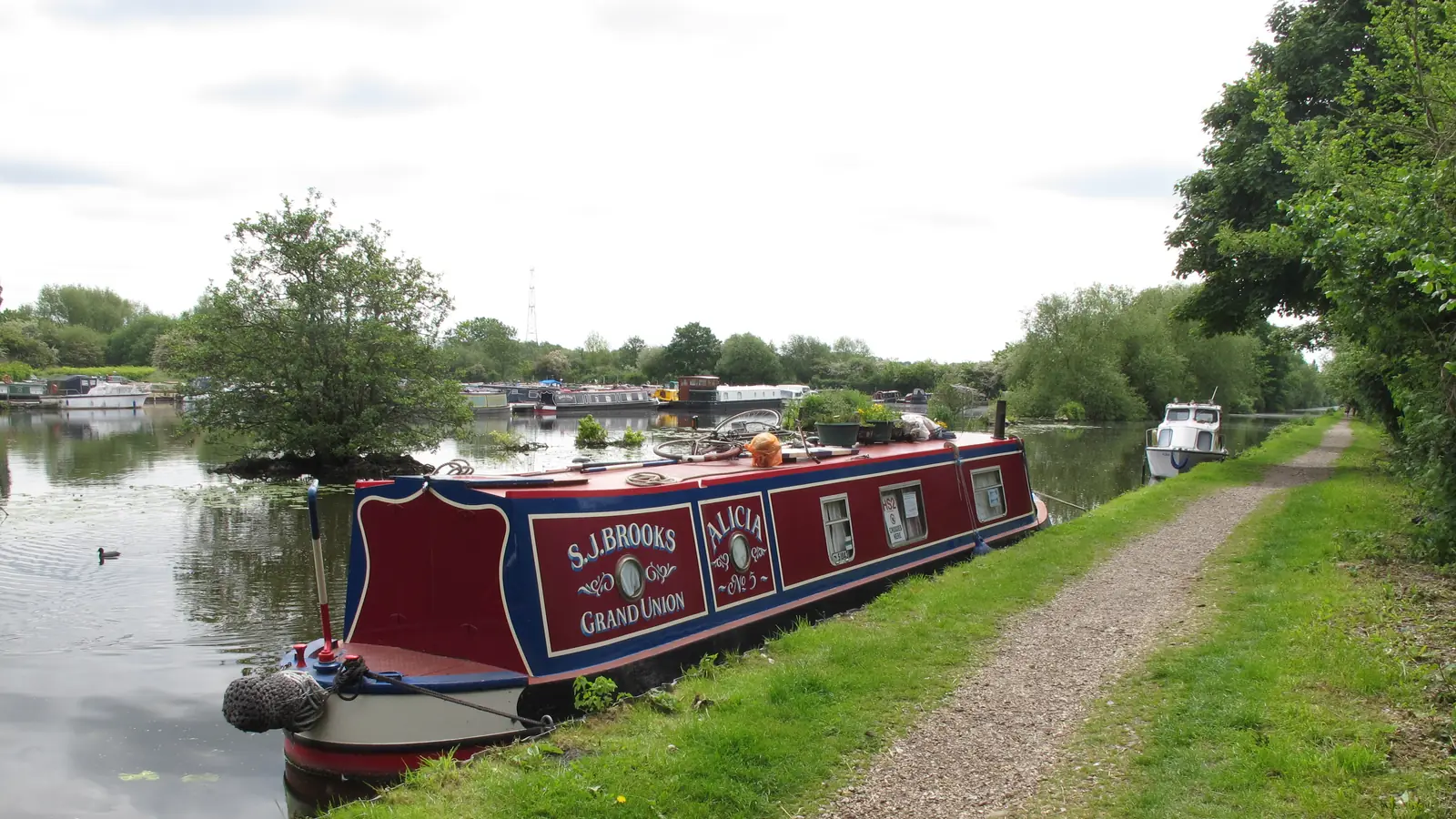
Technical & maker · Water sports
Narrowboat restoration
A narrowboat is a steel box that has to stay watertight, carry a home inside it, and satisfy a safety regime before it can be licensed. Restoring one is therefore not one craft but four sitting on top of each other — hull, joinery, services and compliance — and the order they happen in is not negotiable. The decision that matters most is made before any of it: a pre-purchase survey, with hull thickness readings, is what separates a project from a very large mistake, and the boats that ruin people are the ones bought without one. This page covers the survey, what the steel is doing, how the systems differ from a house, the Boat Safety Scheme that examines the result, and what to send out rather than do yourself.
Also known as canal boat restoration, narrowboat refit, boat fit-out, restoring a narrowboat.
A narrowboat is a welded steel shell, typically 6 foot 10 inches wide and anywhere from 30 to 70 feet long, with a home built inside it. Restoring one means working on four things at once — the hull, the joinery, the services and the compliance — and the reason projects go wrong is almost never that any one of them is hard. It is that they have an order, and the order is unforgiving.
Everything begins with steel. A hull thins by corrosion from the outside, invisibly, and thickness is measured ultrasonically rather than judged. A pre-purchase survey with hull readings is the decision the whole project rests on, because a sound shell can carry any amount of patient work inside it and a failed one cannot be rescued by any of it. The boats that ruin people are bought on the strength of a nice interior.
Then it is a services problem more than a woodworking one. A boat generates its own electricity, carries its own water and gas, heats itself with a solid-fuel stove, and does all of it in a damp, vibrating, moving steel box where domestic practice does not transfer. That is why so much of this page is about what the systems are rather than about cabinets.
And the whole thing is examined. The Boat Safety Scheme decides whether the result may be licensed, which means the standard is not your judgement — it is a published one, and building to it is far cheaper than retrofitting for it.
- The decision that matters
- Survey before purchase
- What cannot be rescued
- A failed hull
- The real difficulty
- Sequencing, not skill
- Judged by
- The Boat Safety Scheme
- Realistic timescale
- Two to five years
Step 1: Decide what you actually want to end up with
A liveaboard home, a holiday boat, or a project for its own sake are three different boats and three different budgets. The most expensive mistake in this hobby is buying a boat suited to one and wanting another.
Step 2: Work out the running costs before the purchase price
Mooring, licence, insurance and blacking run from the day you own it, whether or not you are working on it. A cheap boat with an expensive mooring is a more common trap than an expensive boat.
Step 3: Get a full out-of-water survey, always
With ultrasonic hull thickness readings. £600–£1,200, and the single best-value thing in the whole subject. A seller unwilling to allow one has told you what you needed to know.
Step 4: Read the survey for the steel first
Everything above the waterline is negotiable and fixable by somebody patient. Hull thickness, pitting and the state of the baseplate are not. Overplating is a real remedy and a costly one, and it belongs in the purchase price rather than in a later surprise.
Step 5: Fix the shell and the services before anything visible
Steel treatment, insulation, wiring and plumbing all live behind the linings. Every hour spent on joinery before those are in is an hour that gets undone, and this is the sequencing error that stalls most projects.
Step 6: Get the stove, a bed and a toilet working early
Especially if you intend to live aboard while working. A boat that is habitable is a boat that gets finished; a boat that is a building site is one that gets sold half-done.
Step 7: Book the trades before you need them
Boat gas engineers, welders and dry docks are booked out months ahead in season, and the whole project waits on them. Sequencing around trade availability is a real planning skill in this hobby.
- The hull and its coatings — Steel, protected by blacking below the waterline and paint above. Blacking every two to three years is not maintenance to defer — it is the whole strategy for keeping the asset. Anodes protect against galvanic corrosion and are consumable.
- Insulation — Spray foam or board, and the difference it makes to condensation is larger than the difference it makes to heat. A steel box in a British winter runs with water on the inside of the walls unless it is insulated properly, and that water is what destroys the joinery you are about to fit.
- 12V electrics and batteries — The heart of a modern fit-out. A domestic battery bank, charged by the engine alternator, solar or shoreline, running lights, pumps and electronics. Sizing it is arithmetic; installing it in a vibrating damp environment is not domestic practice.
- 240V, inverters and shoreline — Either from an inverter or from a shore supply, and the two must not be able to meet. This is the part of a boat’s electrical system most often done badly by competent house electricians.
- Gas — LPG in a sealed, drained locker, feeding cooker and sometimes water heating. Registered boat engineer work, without exception.
- Heating — Solid-fuel stove almost universally, sometimes with a back boiler and radiators, sometimes a diesel heater alongside. Specified clearances, hearth and flue, and a designed air supply.
- Water and waste — A tank, a pump, a calorifier for hot water, and a toilet that is either pump-out or cassette — a decision with consequences for how you live rather than for how you build. Waste is not connected to anything and that shapes the whole layout.
- Ventilation — Fixed, calculated, and not to be reduced. It is a required feature that keeps combustion safe and condensation manageable, and blocking it because the boat is draughty is the specific error behind the accidents.
- Tools — Ordinary joinery tools plus an angle grinder, a decent drill, and the willingness to work in confined space. Welding gear only if you are qualified to use it, which most owners are not.
- Water running down the inside of the walls — Condensation, not a leak, and it means the insulation is inadequate or has been bridged by something metal. A steel hull is cold and a boat full of people, cooking and a stove is humid. Fixing it before fitting the linings is far cheaper than after.
- Rust blooming through new paint — Preparation rather than paint. Steel needs proper mechanical preparation and the correct primer system, and painting over inadequately treated rust simply hides the clock. This is the commonest disappointment in owner-done work.
- Batteries that will not hold a charge — Usually chronic undercharging or a bank sized for a boat somebody else lives on. Boat electrical problems are much more often a system design issue than a component failure, which is why the arithmetic matters more than the brand.
- Damp in the bilge — Could be a stern gland doing its job, could be a deck leak, could be something serious. It is the one symptom worth investigating properly rather than pumping out and forgetting, because the answer ranges from normal to structural.
- A stove that will not draw — Flue, ventilation, or the wind direction on that mooring. Worth solving properly rather than living with, because a stove that will not draw is also a stove putting combustion products where you are.
- Doors and drawers that stop fitting — A boat flexes and moves, and joinery built to house tolerances binds. It is the reason boat fit-out uses different construction habits, and it is learnt the first time a cupboard jams after a cruise.
- Failing the safety examination — Most commonly on ventilation, fuel system detail or electrical installation. Almost always cheaper to prevent than to remedy, and the examination criteria are published — reading them at the start of a project rather than the end is the single best piece of planning advice here.
- The project has stalled — The most common failure of all, and it is nearly always sequencing or habitability rather than difficulty. A boat you can sleep on gets finished; a boat that is a building site with no working stove does not.
A steel boat has a maintenance rhythm that runs whether or not a restoration is happening, and budgeting for it is part of owning the project rather than something that begins when the work stops. Most of it is corrosion management, and corrosion does not pause for your schedule.
- Blacking, every two to three years — The boat comes out of the water, the hull below the waterline is pressure-washed and recoated. £700–£1,500 including dock time, and it is the core cycle of steel boat ownership rather than an optional refresh. Deferring it is the single most expensive economy available, because what it protects is the asset.
- Anodes, checked at every blacking — Sacrificial blocks that corrode instead of the hull. Consumable by design, cheap, and replaced when substantially wasted. A boat with spent anodes is protecting nothing.
- The paintwork above the waterline — Touched up continuously rather than redone occasionally. Rust starts at a chip and works under the surrounding paint, so the useful habit is dealing with chips the week they appear rather than planning a repaint.
- The stove and the flue — Swept at least annually, and inspected. This is maintenance with a safety consequence rather than a housekeeping one, and it is the routine most often skipped on a boat that is being lived on through a winter.
- Engine servicing — Oil, filters, belts, the raw water system and the stern gland, on the engine manufacturer’s schedule rather than on a car’s. Marine engines run at sustained load and are less forgiving of neglect than a vehicle used for short journeys.
- Batteries and charging — Checked and kept charged, particularly over a winter when a boat is unused. Chronic undercharging is what kills domestic battery banks, and a bank left flat for months is usually a bank to replace.
- The bilge — Kept dry and looked at. Water in the bilge is either normal from a traditional stern gland or a symptom worth chasing, and the only way to tell is to know what normal looks like on your boat.
- Ventilation, which is maintenance too — Vents get blocked by cushions, boxes, insulation and good intentions. Checking they are clear is a two-minute job with the largest safety return of anything on this list.
- Winterising, if it is unused — Draining or protecting the water system against freezing, and the engine likewise. A cracked calorifier or a frost-damaged engine is an expensive way to learn the British winter reaches inside a steel box.
- Carbon monoxide — The recurring fatal accident on boats, and it comes from appliances and ventilation rather than from carelessness. A boat is a small sealed volume with combustion inside it, ventilation is a designed feature rather than a draught to be eliminated, and blocking vents to stop a boat being cold is the specific thing that kills people. Alarms are cheap, required, and not a substitute for the installation being right.
- LPG — Heavier than air, so it collects in the bilge rather than dispersing, which is why boat gas systems are built differently from domestic ones and why the work needs an engineer registered for boats specifically. This is the one system with no reasonable owner-installed version.
- Solid-fuel stoves — Almost universal on narrowboats and responsible for both the fires and a share of the carbon monoxide. Clearances, hearth, flue and the air supply are the whole of it, and they are specified rather than judged. A stove fitted by eye is the classic dangerous restoration.
- Hot work on a hull — Welding and grinding on a boat that has held fuel, in a confined space, over water. Fire watch, ventilation, and knowing what was in a tank before cutting near it. This is contracted out by most owners for good reason.
- Working over and beside water — The unglamorous hazard. Cold water, no easy exit from a canal, and tools and people falling in. Never work alone on a boat out of the water on blocks, and treat a dry dock as the industrial environment it is.
- Dust, fume and confined space — Old paint, rust, insulation and adhesives in a two-metre-wide space with poor ventilation. Extraction and a fitted respirator rather than a paper mask, and the assumption that anything on a boat built before the 1980s may contain something you would rather not disturb.
- What the examination covers, and what it does not — The Boat Safety Scheme is about the boat being safe to others as much as to you, and passing it is not a statement that a restoration is finished or good. It is a floor rather than a standard of workmanship, and treating a pass as a verdict on the work is a misreading.
- Cosmetic refresh — Paint, soft furnishings, worktops, a new stove. Months rather than years, needs no steelwork, and is the sane first project. Also the one most likely to reveal what the survey hinted at.
- Full interior refit — Strip to the shell, re-insulate, rewire, replumb, rebuild. The mainstream restoration and the one this page is mostly about. Two to five years for an owner working weekends.
- Sailaway fit-out — A new shell bought with engine and ballast and nothing else, fitted out from scratch. Not a restoration at all — no corrosion, no previous owner’s decisions, and a known starting point. Frequently cheaper in total than rescuing a bad boat.
- Hull and steelwork projects — Overplating, replacing a baseplate, rebuilding a stern. Trade work, dry dock time and serious money, and the point at which a project stops being a hobby and becomes a commission.
- Historic working boats — Former cargo boats, often riveted, sometimes wooden-bottomed, with a conservation dimension and a devoted community. A different craft with different materials and its own advice — not a harder version of this.
- Wooden-hulled craft — Rot, fastenings and caulking rather than corrosion. Named here because a reader browsing canal boats will meet them, and because almost nothing on this page transfers.
- Engine restoration — Vintage diesel engines have their own following, their own parts networks and their own enthusiasts, quite separate from the boat around them. Many people restore the engine and pay somebody else for the rest.
- Signwriting and traditional decoration — Roses and castles, lettering and the traditional livery. A genuine decorative craft with a real heritage and a small number of practitioners, and the part of a restoration most often commissioned in.
- And using the boat, which is elsewhere — Cruising, locks, licensing and continuous cruising are the other half of canal life and are not this page. They are a separate subject and this catalogue does not publish them yet.
- Still deciding — Narrowboat restoration vs campervan conversion
A restoration is finished, in the sense that matters administratively, when the boat can be licensed — and that is a chain of three things rather than one. This section sets out the chain at orientation level. It reproduces no requirement, because the examination criteria and the licence conditions are published, are revised, and are exactly what somebody should be reading in full.
- A Boat Safety Scheme certificate — The examination covering fuel, gas, electrical installation, ventilation and fire safety, renewed periodically. It is the gate: without a current certificate the boat cannot generally be licensed. It is also the reason to read the published requirements at the start of a project rather than at the end — ventilation and appliance installation are dramatically cheaper to get right than to retrofit.
- Insurance — Third-party cover at minimum is a condition of licensing on the main navigations. An insurer will want to know about the state of the boat and frequently about the survey, which is one more reason the survey is not optional.
- A licence from the navigation authority — Issued by whoever manages the waterway, and requiring the certificate and the insurance. Different authorities manage different networks and their conditions differ, which is why this page names the requirement rather than describing it.
- A mooring, or a lawful alternative to one — Where the boat lives is a licensing question as well as a practical one, and the arrangements available — a home mooring, or continuous cruising with its own conditions — differ by authority and have changed. This is the part that belongs to narrowboating rather than to restoration, and it is named here because it decides the running costs of a project.
- Residential use is a separate question again — Living aboard engages planning, mooring terms and council arrangements that are distinct from anything about the boat itself. Many restorations are undertaken in order to live aboard, and the boat passing its examination says nothing about whether the mooring permits it.
- What is not regulated — Nobody licenses you to do the work. There is no qualification required to restore your own boat, and no inspection of the process — only of the result, and only in the areas the examination covers. That asymmetry is worth understanding: the joinery is entirely yours, and the gas is not.
- Shell
- The bare welded steel hull and superstructure, with no fit-out. What a sailaway starts as.
- Sailaway
- A new shell supplied with engine and ballast and little else, for the owner to fit out. Stages of completion vary and are worth pinning down precisely.
- Baseplate
- The steel floor of the hull. Thickness here is the number a survey most turns on, because it is the hardest to inspect and the most expensive to remedy.
- Overplating
- Welding new steel over a thinned hull. A legitimate repair, a serious expense, and something to price into a purchase rather than discover after it.
- Blacking
- The protective coating below the waterline, renewed every two to three years out of the water. The core maintenance cycle of owning a steel boat.
- Anode
- A sacrificial block that corrodes instead of the hull. Consumable, checked at blacking, and cheap insurance.
- Calorifier
- The hot water cylinder, usually heated by the engine and sometimes by the stove. The reason a boat has hot water after cruising.
- Boat Safety Schemealso: BSS
- The examination a boat must pass to be licensed on most waterways, covering fuel, gas, electrics, ventilation and fire. A floor rather than a judgement of workmanship.
- Pump-out and cassette
- The two toilet systems. A decision about how you live with the boat rather than how you build it, and one that shapes the layout.
- Stern gland
- The seal where the propeller shaft leaves the hull. Designed to drip slightly on traditional types, which is why a little water in the bilge is not automatically a fault.
- Tumblehome
- The inward slope of the cabin sides. Part of why interior space is tighter than the beam suggests and why boat joinery is not house joinery.
Narrowboats exist because of a decision made in the eighteenth century: the narrow canals of the English Midlands were built to a gauge of about seven feet, and the boats were built to fit them. For roughly two centuries they carried cargo, crewed by families living in a cabin under ten feet long, and the decorative tradition of roses and castles belongs to that period and that way of living.
Freight collapsed through the middle of the twentieth century and the canals came close to being filled in. What saved them was a preservation and leisure movement — the Inland Waterways Association from the 1940s onwards, restoration campaigns, and a slow reinvention of the network as somewhere to go rather than a way to move goods.
The modern hobby comes out of that inheritance twice over. Some of it is genuine conservation: historic working boats maintained by people who care about riveted hulls and correct livery. Most of it is something newer — steel shells built from the 1970s onwards purely as leisure and residential craft, and increasingly as homes, driven in the last two decades by housing costs as much as by any love of canals. That is why the average restoration today is a housing project with a hull attached, and why the safety regime around it has grown more prominent rather than less.
- What is the single most important thing before buying?
- A full pre-purchase survey out of the water, including ultrasonic hull thickness readings. It costs £600–£1,200 and it is the difference between a restoration project and an unsalvageable liability, because steel thins from the outside where you cannot see it and a hull that has gone is the one problem that cannot be worked around. Buying a boat without one, on the strength of a nice interior, is the mistake this hobby is built on. Everything above the waterline can be fixed by somebody patient; the hull cannot.
- How is this different from narrowboating?
- This page is about restoring the boat, not about using it. Cruising, licensing, navigation, locks, continuous cruising rules and mooring arrangements are the other subject, and it is not published here yet — so this page names those things where they affect the work and does not attempt to cover them. If you want to know how to run a boat on the canal system, this is not the page; if you want to know what is involved in bringing one back, it is.
- What is the Boat Safety Scheme?
- The examination a boat has to pass to be licensed on most navigable waterways, covering fuel, gas, electrical installation, ventilation and fire safety. It matters here because it is what turns opinions about your work into a pass or a fail, and because it is easier to build to it than to retrofit for it — ventilation and appliance installation in particular are much cheaper to get right first time. The certificate has to be renewed periodically. This page does not reproduce the requirements: they are published, they are revised, and a summary is exactly what you should not be working from.
- Can I do the gas and electrics myself?
- The gas, no. LPG work on boats requires a registered engineer with the appropriate boat qualification, and it is the system most capable of killing people who never made the mistake — carbon monoxide from badly installed or poorly ventilated appliances is the recurring fatal accident on boats. The 12V and 240V electrical work is more nuanced: plenty of owners do their own and it can be done well, and it still has to satisfy an examiner and an insurer, and a boat is a damp, vibrating, floating environment where domestic practice does not simply transfer. This page describes what the systems are and does not teach either.
- How long does a full restoration take?
- Longer than planned, and the honest range for an owner working evenings and weekends on a boat needing steelwork and a full fit-out is two to five years. The parts that surprise people are not the joinery but the sequencing — you cannot line the walls before the wiring is in, cannot fit the wiring before the insulation, cannot insulate before the steel is sound and treated. Most projects stall not from difficulty but from a step done out of order that has to be undone.
- Can I live on it while I work on it?
- Many people do and it is the reason a great many restorations get finished at all, because the alternative is paying rent and mooring at once. It is also genuinely hard: no heating for a winter, no working sanitation for a stretch, dust everywhere and nowhere to escape to. The advice everybody gives afterwards is to get the stove, the bed and the toilet working first and treat everything else as an improvement on a liveable boat.
- Is a wooden or a historic boat the same job?
- No, and it is a much bigger one. Historic working boats and wooden-hulled craft carry a different set of skills, a different material behaviour and often a conservation dimension with its own advice and grant structures. The rot and fastening problems of a wooden hull have nothing in common with the corrosion problems of a steel one, and anybody drawn to that end should treat it as a distinct craft rather than a variant.
Guides
Longer answers to questions this page can only summarise.
If you like this
Each of these is here for a stated reason, not because it is also a hobby.
Similar to
- Campervan conversion — The same project in a different vessel — a small space, its own power, water and heating, a safety regime, and a fit-out sequence that punishes doing things out of order.
Goes well with
- Hand engraving — Signwriting and traditional canal decoration are the finishing craft of this subject, and lettering by hand is the skill behind both.
- Hobby welding — A steel hull is a welded object, and restoration work on one is largely plating and patching. The narrowboat page names welding as one of the trade competences it declines to teach, which makes this the honest direction of the link: it is the subject that explains what the tool is, not permission to use it on a hull below the waterline.
- Wood finishing — A boat interior is a large joinery project in a damp, moving environment, and what the surfaces are finished with decides how it survives its first winter.
Shares equipment with
- Home machining — Engine and fittings work draws on the same tools and the same relationship with metal, and vintage marine engines are a restoration hobby of their own.
Substantial
Last reviewed 2026-08-19. Cost, time and difficulty figures on this page are HobbyHQ estimates — see how we work. Something here wrong or out of date? Tell us.