Racket & bat sports
Table tennis
Almost everyone has played table tennis and almost nobody has played it properly. The gap between the version in a pub and the version in a club is larger than in any other racket sport, and it comes down to two things a casual player has never encountered: spin, and a legal service. Understanding those turns a familiar game into a new one.
Also known as ping pong, whiff-whaff.
Table tennis is played on a table 2.74m long and 1.525m wide, standing 76cm from the floor, divided by a net 15.25cm high. The ball is 40mm of plastic weighing under three grams. Those dimensions have not changed much in decades; almost everything else about the sport has.
What makes the club game different from the version you have played is spin. A 40mm ball weighing 2.7 grams can be made to rotate at extraordinary rates, and the modern rubber on a bat is designed to grip it and do exactly that. A ball with heavy topspin dips sharply and kicks forward off the table; one with backspin floats and then stops; one with sidespin curves. A casual player returning a heavily spun serve with a flat bat sends it into the net or off the end and cannot see why.
The second difference is the service, which has a specific and strictly enforced law that almost no recreational player follows. Together these two things explain why a decent club player beats a good casual player without appearing to try, and why closing that gap is genuinely satisfying.
- Still deciding — Table tennis vs badminton
Step 1: Find a club night, and expect to be beaten by a pensioner
Almost every British town has a league club with a social or beginners’ session, typically £4–£8 with bats to borrow. The experience of being comprehensively outplayed by somebody twice your age who barely moves is the standard introduction, and it is the fastest way to understand what the sport actually is.
You will know it worked when: You see what spin and placement do, from the receiving end.
Step 2: Learn a legal service before you learn anything else
Ball resting on a flat open palm, tossed at least 16cm near-vertically, struck on the way down from behind the end line. It feels awkward and it is the foundation of every serve you will ever develop — learning to serve out of the hand first means unlearning it later.
You will know it worked when: Your serve is legal, and you can start putting spin on it deliberately.
Step 3: Buy a control-oriented assembled bat
£25–£45 from a known manufacturer. Fast professional rubber magnifies every fault and gives no feedback on a mistimed shot; control rubber tells you what you did.
You will know it worked when: Equipment that teaches rather than punishes.
Step 4: Drill the forehand and backhand drive before rallying competitively
Twenty minutes of cooperative back-and-forth with a partner, aiming for consistency rather than winners, builds more than an hour of matches. Most clubs run this as a matter of course.
You will know it worked when: A repeatable stroke rather than a collection of improvisations.
Step 5: Watch the opponent’s bat, not the ball
The single habit that separates club play from social play. Spin is imparted at contact and is nearly invisible afterwards, so the information you need is in the direction their bat was travelling.
You will know it worked when: You start returning serves you previously could not touch.
Sources for this section
- ITTF Handbook — Laws of Table Tennis (opens in a new tab) — International Table Tennis Federation · Governing body · corroborated indirectly
- The service is the big one — The ball must rest on a stationary, flat, open palm; it must be projected upwards near-vertically at least 16cm; and it must be struck on the way down, from behind the end line, with the ball visible to the receiver throughout. The 16cm requirement — roughly the height of the net — exists to stop players disguising spin by striking the ball straight out of the hand. Almost nobody in a pub does this, and it is the first thing a club will correct.
- Games are to 11, not 21 — Changed internationally in 2001. Win by two, best of five or seven games.
- Two serves each, not five — Service alternates every two points. At 10–10 it alternates every point.
- You may not volley — The ball must bounce on your side before you hit it. Striking it before it bounces loses the point, even if it was going out.
- The edge is in, the side is not — A ball clipping the top edge of the table is good. One striking the vertical side below the playing surface is not. This is the most-argued point in social play.
- A let serve is replayed, not lost — If the serve clips the net and still lands correctly, the point is replayed with no penalty and no limit on repeats.
These follow the ITTF laws, which are revised periodically — anything competition-critical should be checked against the current handbook rather than against this page.
Sources for this section
- ITTF Handbook — Laws of Table Tennis (opens in a new tab) — International Table Tennis Federation · Governing body · corroborated indirectly
A competition bat is not a single object. It is a wooden blade with a rubber glued to each side, and the two are bought and replaced separately. This is the thing casual players find surprising, and it is the whole reason the sport has an equipment culture.
- The blade — Usually five to seven plies of wood, sometimes with carbon layers. Faster blades transmit more energy and less feel; slower ones give control. Beginners want control, and a slow all-round blade is easier to learn on than a fast one.
- The rubber — A sheet of pimpled rubber over a sponge layer. Almost all modern rubbers are laid pimples-inwards, giving a smooth grippy surface that generates spin. Thicker sponge means more speed and less control.
- The two sides must differ in colour — One side red, one black — or since a 2021 rule change, black plus one of several permitted colours. This exists so the opponent can see which surface struck the ball, because the two sides can behave completely differently.
- Pimples-out and long pips — Rubbers laid pimples-outward, which reverse or kill spin rather than generating it. Playing somebody using long pips for the first time is deeply confusing, and that is the point.
- Anti-spin — A slick, low-friction rubber that does not grip the ball at all. Rare, legal, and equally disorienting.
- Pre-assembled bats — A £25–£45 assembled bat from a reputable maker is the right first purchase and will not hold you back for a year or more. The £10 supermarket bat, with a hard thin rubber, genuinely will.
The common beginner error is to buy a fast, high-spin professional rubber early. It magnifies every fault, gives no feedback on a mistimed shot, and wears out in months. Control first is not a consolation; it is how the sport is learned.
The official dimensions, for anyone setting up at home:
- Table
- 2.74m × 1.525m, 76cm high
- Net
- 15.25cm high across the full width
- Ball
- 40mm plastic, 2.7g
- Minimum playing space
- Around 5m × 3m for casual play; competition areas are considerably larger
Sources for this section
- ITTF Handbook — Laws of Table Tennis (opens in a new tab) — International Table Tennis Federation · Governing body · corroborated indirectly
- Go deeper — Choosing a bat, and keeping the rubber alive
The single skill that separates club play from social play is reading spin and adjusting the bat angle to counter it. It is learnable and it is largely a matter of knowing what to look at.
- Watch the bat, not the ball — Spin is imparted at contact and is almost invisible afterwards. The direction the opponent’s bat is travelling at the moment it strikes tells you what is on the ball.
- Topspin dips and kicks forward — Counter it by closing the bat face — angling it downwards over the ball — and brushing upwards.
- Backspin floats and stops — Counter it by opening the bat face — angling it upwards — and lifting. Playing a backspin ball with a closed bat puts it straight into the net, which is the commonest single error against a chopping opponent.
- Sidespin curves — Angle the bat against the curve. Sidespin serves are the reason casual receivers hit the ball off the side of the table without understanding why.
- No spin is also a spin — A ball served with a convincing motion but no actual spin is one of the most effective serves at club level, precisely because the receiver compensates for spin that is not there.
Beyond spin, the technical progression is short and well defined: a consistent forehand and backhand drive, then a push (a controlled backspin return), then a topspin loop, then the service variations. Footwork underpins all of it — the commonest fault at every level below county is reaching for the ball instead of moving the feet to it.
Table tennis has the widest gap in this catalogue between the version everybody has played and the version that is a sport, and crossing it is a specific and slightly uncomfortable experience: the first session at a club is where a good garage player discovers that spin exists. What follows is worth it, and this is roughly the order.
- A club, which is the whole of the first step — There is no substitute and no gradual route. Club play introduces spin as something being done to you deliberately, and reading it is the skill the sport is actually about. Expect to lose to people who look like they are barely moving, and expect that to be the most useful month of the hobby.
- Getting your own bat, at the right moment — Which is after a few months rather than at the start — a blade and rubbers chosen before you know whether you attack or block is a guess. The guide on this site covers what the choice actually involves and how to keep the rubber alive, which matters more than the initial choice does.
- League play — Local leagues are the natural next thing and they are more accessible than people assume: divisions run deep, teams are small, and most leagues are actively short of players. It is also where the improvement rate goes up sharply, because competitive matches expose what practice does not.
- Coaching, which is unusually high-value here — This is a technique-dense sport where a small correction to a stroke changes the result immediately, and a handful of sessions with a coach is worth a season of playing badly with confidence. Service in particular is almost impossible to develop alone, because you cannot see what your own spin does.
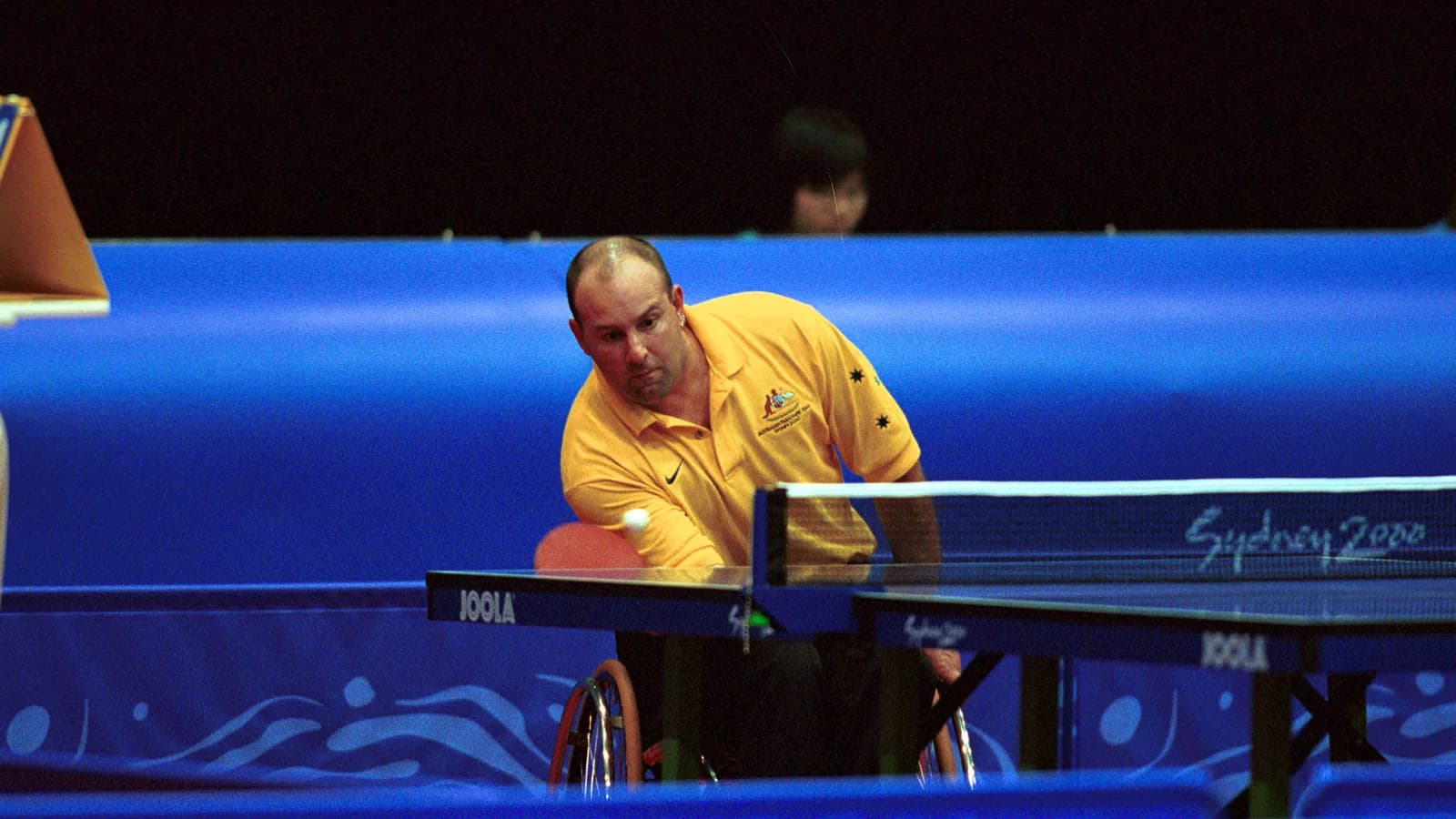
- Veterans, para and the branches that keep people in — Table tennis has one of the longest participation spans of any sport, and veterans competition is a substantial world in its own right rather than a consolation. Para table tennis is a major discipline with its own classifications. Both mean the sport does not have to end when speed does.
- Coaching and umpiring, which clubs run on — Qualifications exist at every level and clubs are almost universally short of both. It is also the point at which the sport starts giving something back rather than only taking evenings.
- Serving out of the hand — Illegal, and it hides your spin from an opponent entitled to see it. It also stops you developing a real serve.
- Buying a professional bat first — Fast, spinny rubber magnifies faults and gives no feedback. Control-oriented equipment teaches faster.
- Standing too close to the table — Recreational players crowd the end line and get jammed. Half a step back gives time and room to swing.
- Playing every ball with the arm — The shot comes from rotation and weight transfer. Arm-only play is inconsistent and tiring.
- Not moving the feet — Reaching sideways rather than stepping is the single most common technical fault in the sport.
- Ignoring the opponent’s bat — You cannot read spin off the ball, so watching the flight rather than the contact means guessing every time.
- Using a dirty rubber — Rubber loses grip as it collects dust and oils, and grip is the whole point. Clean it with water and a sponge after sessions; replace it when it stops gripping, typically every six to twelve months of regular play.
Almost everything that suddenly goes wrong in table tennis gets blamed on technique, and a good share of it is equipment or the ball. That matters because the two have opposite fixes: a worn rubber is solved in ten minutes with £25, and no amount of practice will solve it, while a genuine stroke fault will not improve because you bought something.
Read each entry as symptom → likely class → what you can safely check → what to do next. Nothing here identifies a unique cause; several classes produce the same miss, and the point is to eliminate the cheap ones before spending a coach’s attention on the one you cannot. What this page does not do is tell you what your arm did, because text cannot see it.
- Class 1
- The rubber — yours, and cheap
- Class 2
- The ball and the table — yours, and free
- Class 3
- The rules — yours, and worth a minute
- Class 4
- Technique — a coach’s
- The ball suddenly will not grip — everything slides long — Rubber. The commonest cause by a distance, and it arrives gradually enough that people adapt to it without noticing. Check by looking across the surface in a raking light: a fresh rubber is matt and slightly tacky, a dead one is shiny and slick. Wipe it with a damp cloth first, because dust does the same thing temporarily and costs nothing to rule out. If it is still shiny, it is worn out — rubbers are consumables with a life of months, not years, and this is the one piece of maintenance the sport genuinely requires.
- Your shots go long against one opponent and not another — The opponent’s rubber, not yours. Different surfaces return spin differently, and long pips or anti-spin reverse what you expect. Look at their bat between points — the two sides are legally required to be different colours precisely so you can. This is information rather than a fault, and the answer is to change what you do rather than to hit harder.
- Balls behave inconsistently, or break often — The ball. Cheap training balls vary in weight and roundness enough to matter, and a ball with a seam flaw wobbles. Spin one on the table: a good ball spins smoothly with no wobble. Star-rated balls exist for this reason and the difference is real at any level.
- The bounce is dead, or dies in one part of the table — The table. Cheap or damp-stored tables have soft spots and a warped one bounces differently near the edges. Drop a ball from a fixed height in several places and compare. Nothing about your play changes this, and it is worth knowing before you conclude anything about yourself from a session on it.
- Your serve keeps being called — Rules. The service law is precise and it is where most club-level disputes start: the ball rests on an open flat palm, is thrown near-vertically at least 16cm, and is struck behind the end line with the ball visible to the opponent throughout. Ask the umpire or your opponent which part it was — it is an ordinary question, and the answer is usually the toss height or a hand that hid the ball.
- You lose points you thought you had won, at the edge — Rules. The edge of the table is in; the side is not. This is genuinely hard to judge and it is not a controversy — the call belongs to whoever can see it, and in social play it is normal to give the point away rather than argue about a millimetre.
- The same fault happens at the same moment every time — Technique, and this page stops. A fault that repeats identically at a specific point in a stroke is the signature of a genuine technical limit rather than a bad day, and it is exactly what this page will not attempt to fix. What is useful is the observation: "it happens on the backhand, only when the ball is deep" is a precise thing to bring a coach. Filming from the side is the other useful thing, because your own sense of what happened is unreliable — which is why the sport is coached.
- It hurts — Stop, and this page has nothing further to offer. Shoulder and elbow pain that persists between sessions, or anything that changes what a joint will do, is a question for a physiotherapist or a doctor rather than for a coach or a page.
The habit worth building is to check the cheap classes first. Rubber, ball, table and rules take a couple of minutes between them, they account for a real share of what feels like sudden decline, and eliminating them turns "I have got worse" into a question somebody can actually answer.
- Blade
- The wooden body of the bat, bought separately from the rubbers.
- Rubber
- The sheet of pimpled rubber and sponge glued to each face of the blade. What actually generates spin.
- Loop
- A heavy topspin stroke brushing up the back of the ball. The dominant attacking shot in the modern game.
- Push
- A controlled backspin return played close to the table, usually to stop an opponent attacking.
- Chop
- A heavy backspin defensive stroke played from well back from the table.
- Block
- Absorbing an opponent’s topspin with a closed bat angle and minimal swing, returning it quickly.
- Long pips
- A rubber with long outward-facing pimples that reverses incoming spin. Disorienting to play against by design.
- Let
- A rally replayed with no point scored — most commonly a serve clipping the net and landing correctly.
- Penhold
- A grip holding the bat like a pen, dominant historically in East Asia. The alternative to the shakehand grip used by most European players.
- Expedite
- A rule invoked after ten minutes of a single game, under which the receiver wins the point if they make thirteen returns. Exists to stop defensive stalemates.
Table tennis began in late-Victorian England as an after-dinner parlour game — books for a net, a cigar box lid for a bat, a champagne cork for a ball, according to accounts that are repeated everywhere and documented nowhere in particular. It is worth treating those origin details as tradition rather than record. What is documented is the commercial history: the name "Ping-Pong" was registered as a trade name in 1901, and the game’s viability changed when celluloid balls replaced cork and rubber ones around the turn of the century.
The sport internationalised quickly — the International Table Tennis Federation was founded in 1926 — and its competitive centre moved decisively to East Asia in the second half of the twentieth century. Its most famous moment was political rather than sporting: the exchange of players between the United States and China in 1971, "ping-pong diplomacy", preceded and helped enable the diplomatic opening between the two countries.
The modern game has been reshaped by equipment rules more than by technique. Speed glue, which swelled rubber sponge to increase speed and spin, was banned in 2008; the ball grew from 38mm to 40mm in 2000 to slow rallies for television; and celluloid was replaced by plastic from 2014. Each change was contested and each measurably altered how the game is played.
- Is ping pong the same as table tennis?
- Same game, different register — and the difference is real enough to be worth explaining. "Ping-Pong" began as a registered trade name in 1901 and the term now generally signals recreational play: five serves each, games to 21, serving from the hand, house rules. "Table tennis" signals the codified sport: games to 11, two serves each, and a service law requiring a 16cm toss from an open palm. Nobody will correct you socially, but if you turn up at a club expecting the first and meet the second, the gap is genuinely disorienting.
- Why can I not return their serve?
- Spin, almost certainly. A heavily spun serve requires you to angle the bat against the rotation, and a flat bat sends backspin into the net and topspin off the end. Watch the direction their bat is travelling at the moment of contact rather than watching the ball, and adjust the face angle accordingly. It feels impossible for a few sessions and then becomes automatic.
- What bat should I buy?
- An assembled control-oriented bat from a known manufacturer, £25–£45. It will not hold you back for a year or more. Avoid the £10 supermarket bat, whose thin hard rubber cannot grip the ball, and avoid a fast professional rubber, which magnifies every fault and gives no feedback when you mistime a shot. The custom blade-and-rubbers step comes once you know what you want it to do.
- How much space do I need for a table at home?
- The table itself is 2.74m by 1.525m, and you need room to move at both ends and along the sides. Around 5m by 3m makes for playable casual games; anything much tighter and rallies end because somebody hits a wall. Competition playing areas are considerably larger. Rollaway tables that fold vertically are the usual answer in a garage.
- Is it a real workout?
- More than it looks and less than a running sport. Club play involves near-continuous short lateral movement and a great deal of rapid direction change over a two-hour session, and players finish genuinely tired. What it is not is high impact — which is precisely why it works so well for people with joint problems and for players continuing into their eighties.
Within this activity
Disciplines, variants and techniques that sit inside it.
Disciplines
- Hardbat table tennis — Table tennis with pimpled rubber and no sponge, producing longer rallies and a different game entirely.
If you like this
Each of these is here for a stated reason, not because it is also a hobby.
Similar to
- Pool — Both are club and league sports played indoors year round on somebody else’s equipment, and both reward positional thinking over power.
- Snooker — The other indoor precision sport with a deep club culture, a long apprenticeship and almost no physical barrier to entry.
Indoor alternative
- Pickleball — The same quick-hands paddle feel in a fraction of the space, available almost anywhere and unaffected by weather — pickleball is close to the version you play standing up.
Shares equipment with
- Badminton — Played in the same sports halls on the same club nights, and many players do both because the venue and the evening are already booked.
Sources for this section
- ITTF Handbook — Laws of Table Tennis (opens in a new tab) — International Table Tennis Federation · Governing body · corroborated indirectly
Substantial
Last reviewed 2026-08-13. Cost, time and difficulty figures on this page are HobbyHQ estimates — see how we work. Something here wrong or out of date? Tell us.