Endurance & fitness · Outdoor & adventure
Fell running
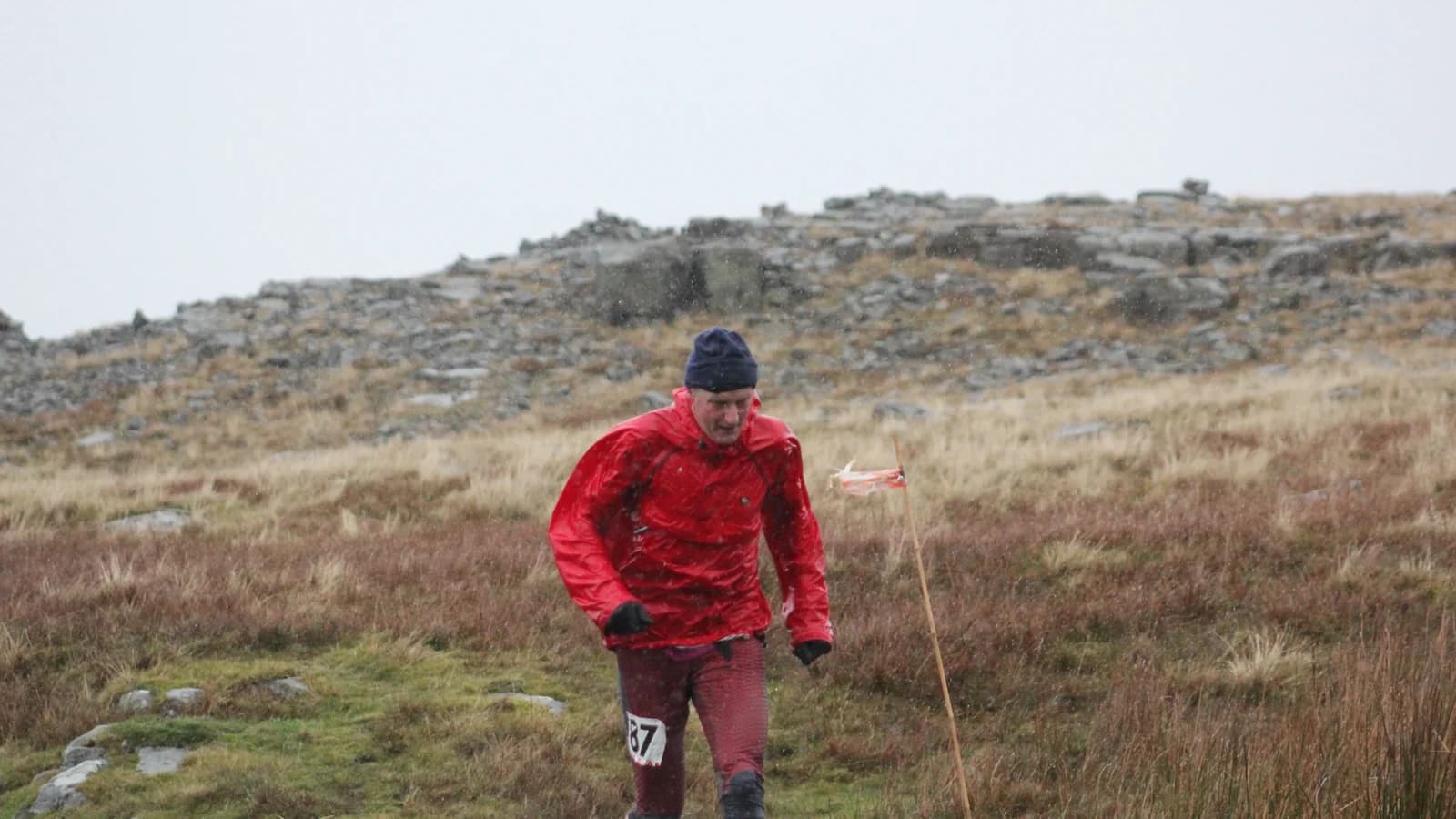
Fell running looks like trail running on steeper ground and is a different sport. Routes are not waymarked between checkpoints, finding your own line is part of the race, and the governing body prohibits GPS for navigation entirely — you carry a paper map and a real compass or you do not compete. That one rule explains almost everything else about the sport: the mandatory kit, the emphasis on hypothermia, the rule that you must report to the organiser even if you drop out, and why the culture is unusually serious about looking after each other.
Also known as hill running, mountain running, fell racing.
Fell running is racing on open hill and mountain ground, up and down, usually on routes that are not marked. It is often described as trail running’s wilder cousin, and that undersells the difference: in a trail race you follow a course, and in a fell race you are given checkpoints and left to work out how to get between them.
That single fact makes this a navigation sport with running attached. It is why the kit list includes a map and compass, why the governing body bans GPS for navigation outright, and why the sport talks about weather and hypothermia far more than about training. It is also why fell runners tend to be unusually good at reading ground — choosing a line is a skill that rewards years and does not correlate closely with fitness.
Against that seriousness, it is one of the most welcoming and cheapest competitive sports in Britain. Entries are single figures and often paid in cash in a field, the whole event is frequently run by volunteers from a tent, and there is no infrastructure to buy your way into.
- What you follow
- Checkpoints, not a marked course
- GPS for navigation
- Banned in all FRA races
- Category letters
- A–C for climb, S/M/L for distance
- The golden rule
- Report to the organiser, always
Progression is by category rather than by time, which is the sensible way to read it: a short mild race, then longer, then more climb, then the races that need real navigation and full kit. Times mean little between courses because no two are comparable, so runners tend to measure themselves against the same race year on year and against the people around them.
The two directions out are longer and wilder. Longer means mountain marathons, ultra-distance fell races and eventually the big rounds, which are as much a logistics project as an athletic one and take years to prepare. Wilder means winter conditions and full mountain days, at which point the sport merges with mountaineering skills and the equipment question reopens. A great many fell runners do neither and race the same short local calendar for decades, which the sport regards as an entirely respectable career.
- Go deeper — The long run: what it is actually for
Step 1: Join a club rather than entering a race
Fell running is club-organised to an unusual degree, and clubs take newcomers out on the ground where the local knowledge lives. This is faster, safer and much cheaper than working it out alone, and it is how nearly everybody starts.
You will know it worked when: People to run with and somewhere to ask questions.
Step 2: Buy fell shoes before anything else
£80–£140, and the single change that makes steep wet ground feel possible rather than alarming. Do this before your first outing rather than after the first slide.
You will know it worked when: Grip that matches the terrain.
Step 3: Enter a short, milder race — a CS or BS
The category system exists for exactly this. A short race on well-trodden ground with a field around you is a genuine fell race with a fraction of the navigational and weather exposure.
You will know it worked when: A first race finished, and the format understood.
Step 4: Learn navigation deliberately
Club sessions, and orienteering as the proper route to it. Map and compass, physical only, because that is what you will be using. This is the skill that opens the rest of the sport and it is the one people postpone.
You will know it worked when: Confidence off a marked path.
Step 5: Assemble the mandatory kit and run with it
Get it before you need it, and run in it so that carrying it is not a novelty on race day. It is a one-time cost that then covers every race you will enter.
You will know it worked when: Kit that passes a check and does not annoy you.
Step 6: Recce the route if you can
The FRA recommends it directly: learn navigation, recce the course, pre-plan escape routes. Knowing the ground is the closest thing to an advantage in this sport and it is available to anybody willing to walk it first.
You will know it worked when: A race you have already partly run.
- Fell shoes, which are not trail shoes — Aggressive, widely spaced studs designed to bite into wet grass, peat and mud rather than to grip rock or hardpack. £80–£140. This is a safety item rather than a performance one: road and trail soles slide on steep wet grass in a way that produces falls, and it is the first thing any club will tell a newcomer.
- The mandatory kit, bought once — The race requirement is listed in full under the rules above; what matters when buying is that the waterproof is the item people get wrong. The hood and the taped seams are specified rather than incidental, so a shower jacket does not qualify however good it is. Buy that once, properly, and the rest of the list is cheap.
- Map and compass, physical only — A traditional baseplate compass and the relevant paper map, because the electronic versions are prohibited. Learning to use them properly is the actual entry requirement for the harder categories, and it is a cheap skill to acquire.
- A bum bag or race vest to carry it in — The mandatory kit has to go somewhere accessible. Most fell runners use a small waist pack or a minimal vest, and comfort while running with the kit is worth trying before a race rather than during one.
- What you do not need — Almost everything else. No facility, no specialist equipment beyond the above, no expensive electronics — and the one gadget people assume is essential is the one that is banned.
- The mandatory kit exists for when you stop moving — The FRA answers the objection directly: full kit "may not be needed when you are running strongly or in good weather, but it could be a life-saver if you have to slow down or stop because of injury or tiredness, or if you need to help another runner in difficulty". A running body generates a lot of heat and a stationary one on a wet hill does not, and that transition is the hazard.
- Know what you are entering before you enter it — The categorisation exists precisely so that a runner can judge this — A to C for climb, S/M/L for distance, plus ER, NS and LK markers. The FRA frames it as a personal duty: "you must be confident you are capable of completing any race you enter."
- The golden rule, and why it is the golden rule — Report to the organiser at the finish whether you completed, did not start, or dropped out. Telling a marshal or another runner does not count. An unaccounted runner means a search, in the dark, in the weather, by people who did not need to be out there.
- Hypothermia is the specific medical risk — Cold, wet and wind, combined with slowing down or stopping, and it can develop quickly. The FRA asks runners to learn to recognise it in themselves and in others, which is a different and more useful instruction than avoiding it.
- Descending is where the injuries happen — Steep, broken, wet ground taken at speed. Ankles and falls dominate the injury list, and descending confidence is a learned skill rather than an inherent one — which is worth knowing before treating a first race descent as a place to prove something.
- Look after each other, and the ground — Stopping for a runner in difficulty is expected rather than optional. The FRA also asks that runners adhere to the Countryside Code — shutting gates, not climbing walls or fences — with damage a possible ground for disqualification, because the sport runs on access to other people’s land.
- Go deeper — When it goes wrong on the fells
- Category (A/B/C and S/M/L)
- The FRA classification. A to C by amount of climb with A hardest, and short, medium or long by distance. Read it before entering.
- ER, NS, LK
- Race markers for experience required, navigational skills required, and local knowledge an advantage.
- FRA Mandatory Minimum Kit
- Waterproof whole body cover with taped seams and attached hood, hat, gloves, map, compass, whistle and emergency food. Compulsory for AL, AM and BL races and checkable at any time.
- The golden rule
- Report to the race organiser at the finish whether or not you completed. Telling a marshal is explicitly not sufficient.
- Line
- The route a runner chooses between checkpoints. Choosing a good one is a large part of the sport and is where local knowledge pays.
- Recce
- Walking or running a race route beforehand. Recommended by the governing body and the main way runners acquire local knowledge.
- Round
- A self-organised long circuit of summits attempted against the clock outside any race, verified by witnesses. A distinctively British institution.
- Bog trotting
- Affectionate name for the sport, and an accurate description of much of the ground.
- Go deeper — The words runners use
- Two letters tell you what the race is — Races are "categorised as A (hardest) to C (milder) on the basis of the amount of climb, and long (L), medium (M) or short (S) on the basis of distance". So AL, AM, AS, BL, BM, BS, CL, CM, CS. Additional markers are ER for experience required, NS for navigational skills required and LK for local knowledge an advantage, and mountain navigation events are categorised MO or MM.
- Mandatory kit for AL, AM and BL races — The FRA Mandatory Minimum Kit is "waterproof whole body cover (with taped seams and integrated attached hood), hat, gloves, map of the route, compass, whistle and emergency food". Organisers may require it at other categories and may require more — a thermal layer, a bivvy bag, a torch or water are all common additions. Best practice at other races is to carry it anyway.
- Kit is checked and non-compliance means disqualification — "The Race Organiser may check your kit at any time and will disqualify you if you fail to comply with the requirements." Checks happen at the start, at checkpoints and at the finish, and there is no discretion about it.
- No GPS for navigation, at all — The strictest rule in the sport. Devices may show distance, time, speed and altitude and may record a track for later analysis. They may not be used "to delineate or follow a route (including the use of arrows or audio signals to warn of being “off track”), to display current position on a map, to display or follow a compass bearing or to reposition yourself or otherwise navigate in any way". A device may be carried for emergencies, but using it — "even momentarily for repositioning" — requires you to retire and declare yourself non-competitive. Maps must be physical and compasses non-electronic.
- Retirement, the golden rule — Once registered you are in the race. If you do not start, miss a cut-off or drop out for any reason, you must report to the organiser at the finish, and a runner missing a cut-off must return to race control "by the fastest & safest route possible, without continuing on the course".
- Juniors — Under-18s need parental or guardian consent to enter, and junior race distances are limited by age. Juniors are asked to bring a waterproof top and leggings to all races and may have to carry full kit in a senior race.
- Conduct and sanctions — The FRA can ban a competitor and organisers can exclude one. Its listed "absolute no-nos" are retiring without reporting, running in someone else’s number or no number, using another person’s membership, cheating on kit requirements, and using GPS for navigation or fixing position.
Fell running failures divide cleanly into three: things that are the ground, things that are a decision made an hour earlier, and things that are a boundary this page does not cross. The middle group is the one that catches experienced runners, because it does not feel like a mistake at the time.
- I am walking most of the climbs and everyone else is too — Not a problem. Above a certain gradient walking is faster and cheaper than running for almost everybody, and the top of the field walks. Check whether your heart rate on the walk is close to your running effort — if it is, you are working, not resting. Next, treat the walk as a technique: hands on thighs, short steps, and practise it, because a strong fell walk is a trained thing.
- My quads are wrecked and my legs feel fine going up — The descents, and it is eccentric loading rather than fitness. It arrives a day late, which is why it gets attributed to the wrong part of the run. Check whether the soreness is quads rather than calves or lungs. Next, build descent volume deliberately and separately, and expect it to be the slowest adaptation in the sport.
- I keep ending up somewhere I did not intend — A navigation problem, and it is the sport rather than a failing. Most fell races are unmarked between checkpoints by design, and the governing body is explicit that finding the line is part of it. Check whether you are navigating in advance or reacting — the difference is whether you knew what the next feature would be before you saw it. Next, learn navigation as a separate skill on non-race days, on paper. Note the rule too: the Fell Runners Association prohibits electronic devices with GPS capability for navigation in its races, and using one for that purpose even momentarily means retiring.
- I ran out of energy and it happened very suddenly — Likely that you never planned to eat, because the run was short in distance. Fell time is not road time — a nine-mile fell race can take as long as a half marathon. Check the expected duration rather than the distance. Next, plan food and drink against hours rather than miles.
- I got very cold, very fast, and I was moving — Weather at height, and this is the one that kills people. The FRA says so directly: hypothermia "has been the cause of several deaths in fell running". Check nothing on the hill — this is not a diagnostic item. Next, this page publishes no treatment and no recognition protocol; carrying the mandatory kit and being willing to turn round are what it does cover, and the FRA guide on this site covers the rest of what a runner can reasonably do.
- My kit failed a race inspection — Usually the waterproof, and usually the seams or the hood rather than the jacket as a whole. Check both before you leave home against the requirement set out under the rules above. Next, expect it to be checked again: the organiser "may check your kit at any time and will disqualify you if you fail to comply".
Sources for this section
- FRA Requirements for Runners 2026 (the “Runners’ Rules”) (opens in a new tab) — Fell Runners Association · Governing body · read — supports the claim
- Short races, up and down — The classic village and show race — a hill, a summit, and back. Often brutally steep and over in under an hour, and the traditional heart of the sport.
- Long mountain races — Category AL, several hours, real navigation and full mandatory kit. Where the sport is most serious and most rewarding, and not a first-season objective.
- Relays — Team events with paired legs on some stages, which is a deliberate safety and navigation measure as well as a social one. Kit requirements follow the longest leg.
- Rounds and challenges — Non-race, self-organised long rounds against the clock, verified by witnesses rather than by chip timing. A distinctive and much-loved part of British hill culture and closer to thru-hiking in its logistics than to racing.
- Mountain marathons and orienteering events — Two-day navigation events with an overnight camp, categorised MM or MO. The point at which fell running and orienteering become close to the same sport.
- Trail running, which is the near neighbour — Marked courses, generally better ground, and no navigation. A separate page, and the crossover is constant in both directions.
- Hillwalking and orienteering — The two activities that supply what fell running needs — ground judgement from one and navigation from the other. Both have their own pages and both are common routes in.
- Still deciding — Trail running vs fell running
Fell running is one of the least commercialised competitive sports in Britain and is proud of it. Entries are frequently a few pounds paid in cash at a table in a field, results are written up by a volunteer, prizes are often a local pie, and the whole apparatus of chip timing, sponsorship and expo that surrounds road running is almost entirely absent. The GPS ban is part of the same instinct: the sport has repeatedly chosen to protect what it is rather than to modernise.
It is also unusually serious about collective responsibility, and the two things are connected. Because races are unmarked and the weather is a genuine hazard, the culture depends on runners looking after each other, reporting in, carrying kit they probably will not need, and stopping for somebody in difficulty. Those are social norms enforced by the community as much as rules enforced by officials.
The English, Scottish and Welsh traditions each have their own history — hill races attached to agricultural shows and Highland gatherings go back well over a century — and the sport carries that inheritance visibly. It remains a sport where a national champion and a first-timer stand in the same field before the same start, which is much of the appeal.
Fell running did not begin as a sport. It began as an event at a livestock fair, and almost everything odd about it now follows from that.
The Grasmere meeting traces itself to the annual Sheep Fair held on the first Tuesday in September, where wrestling contests "for most insignificant prizes" were, in a nineteenth-century account the organisers still quote, "inseparable" from the fair itself. The running came out of the same afternoon. The Guides Race — straight up Silver Howe and back — was first held in 1868, with ten entries, won by G. Birkett.
It is worth noting how that date is known, because the sport is old enough to disagree with itself about its own origins. The 1887 account gives 1869; the organisers correct their own quoted source in a bracketed note saying the first race "was in fact held in 1868, and was also won by Birkett". Where a printed source and an institution’s own records differ by a year, we say so rather than picking one.
The word "guides" is the second inheritance. These were races for men who worked on the fells and knew the ground — shepherds, guides, farm labourers — running for money in front of a crowd that was betting. Bill Teasdale, "a local shepherd from Caldbeck", won at Grasmere ten times in the 1950s and 60s. That professional tradition ran alongside, and was formally separate from, amateur athletics for the best part of a century, and the split is still legible in the records: Grasmere lists Fred Reeves’s 12 minutes 21.6 seconds from 1978 and, separately, Kenny Stuart’s 12 minutes 1 second set "in an Amateur event" in 1985.
The modern sport reunified those strands without ever really becoming an institution, and it did so on purpose. The Fell Runners Association leads its own front page with a line from a chairman of the early 1980s: "…let us spend as much time as we can afford running on the fells with a minimum of rules and regulations commensurate with safety and fair competition."
Read that sentence next to the kit list, the checkpoint discipline and the self-navigation and it stops sounding like nostalgia. A sport descended from unmarked races across country that competitors were expected to know cannot be made safe by marshalling every metre of it, so it makes the runner responsible instead. The minimalism is not a survival from the sheep fair. It is the design.
Sources for this section
- History and Timeline (opens in a new tab) — Grasmere Lakeland Sports and Show · Institutional · read — supports the claim
- Fell Running Principles (opens in a new tab) — Fell Runners Association · Governing body · read — supports the claim
- How is this different from trail running?
- Waymarking and navigation, chiefly. Trail races are marked and you follow the route; fell races are largely unmarked between compulsory checkpoints and finding the best line is part of the competition. The FRA states it directly: "Most race routes are not flagged except at critical points such as the start and finish and part of the challenge of fell racing is to find the optimum route between the compulsory checkpoints." The terrain is also open hillside rather than path, and the consequences of weather are correspondingly higher.
- Is GPS really banned?
- For navigation, completely. "All FRA races strictly prohibit the use of electronic devices with GPS capability for the purposes of navigation." You may use a watch to show distance, time, speed or altitude, and you may record a track for afterwards. What you may not do is use it to position yourself, follow a route or take a bearing — and if you use one for navigation "even momentarily for repositioning – then you must retire from the race and declare yourself non-competitive to the race organiser". Maps must be physical and compasses non-electronic. It is one of the strictest positions in British sport and it is the rule that keeps fell running a navigation sport.
- What do the race categories mean?
- Two letters. Races are "categorised as A (hardest) to C (milder) on the basis of the amount of climb, and long (L), medium (M) or short (S) on the basis of distance" — so an AL is long with a great deal of climb and a CS is short and comparatively gentle. Races may also be marked ER (experience required), NS (navigational skills required) or LK (local knowledge an advantage). Reading the category before entering is the single most useful habit in the sport.
- What kit do I have to carry?
- The FRA Mandatory Minimum Kit, compulsory for all AL, AM and BL races and often required at others. It is set out in full under the rules above rather than repeated here. Two things worth knowing beyond the list: it is genuinely checked, and the stated reason is not bureaucratic — the kit "could be a life-saver if you have to slow down or stop because of injury or tiredness, or if you need to help another runner in difficulty".
- What happens if I drop out?
- You must report to the race organiser at the finish, and this is treated as the most serious rule in the sport — the document calls it the golden rule and lists breaking it among its "absolute no-nos". Telling a marshal or another runner is explicitly not enough: "It is not sufficient to announce your retirement to a marshal on the course or to another runner." The reason is that unaccounted-for runners trigger searches on a hillside in bad weather.
- Do I need to be a good navigator to start?
- Not for every race, and the category system is what lets you choose. Short, milder races on well-trodden ground with a field to follow are a reasonable entry point, and many clubs run navigation training. But the skill is not optional in the long run, and the FRA is blunt about why: "Most serious incidents (and almost all fatalities) in races have occurred when runners have left the route, so having good navigation skills is essential." Orienteering is the standard way to learn it properly.
Guides
Longer answers to questions this page can only summarise.
- Reading an orienteering mapThe colour system, control descriptions, and the four techniques — orienting, thumbing, attack points, aiming off — that make navigation work.
- Reading a mountain weather forecastWhy a mountain forecast says different things from a normal one, what the freezing level actually tells you, and how to turn a forecast into a decision.
Where people actually do this
Area character, access and how to arrive. No routes and no distances — see the page for why.
If you like this
Each of these is here for a stated reason, not because it is also a hobby.
Progresses to
- Orienteering — The same open-country navigation under considerably more physical pressure, and a common destination for competitive orienteers.
- Running — Where road and club runners arrive from, usually via trail, and where the fitness comes from before the ground judgement does.
Similar to
- Trail running — The near neighbour and the commonest route in. Trail races are marked and fell races are largely not, which is the whole difference.
Goes well with
- Hiking — Supplies the ground judgement and hill sense that racing on unmarked open hillside depends on, and recceing a route is walking it first.
Outdoor alternative
- Athletics — The same running fitness taken off the measured surface entirely — navigation, descent and terrain instead of splits and lap counting. Track athletes who dislike being timed frequently find they like this a great deal.
Sources for this section
- FRA Requirements for Runners 2026 (the “Runners’ Rules”) (opens in a new tab) — Fell Runners Association · Governing body · read — supports the claim
Comprehensive
Last reviewed 2026-08-19. Cost, time and difficulty figures on this page are HobbyHQ estimates — see how we work. Something here wrong or out of date? Tell us.