Fell running · Cumbria, north-west England
The Lake District
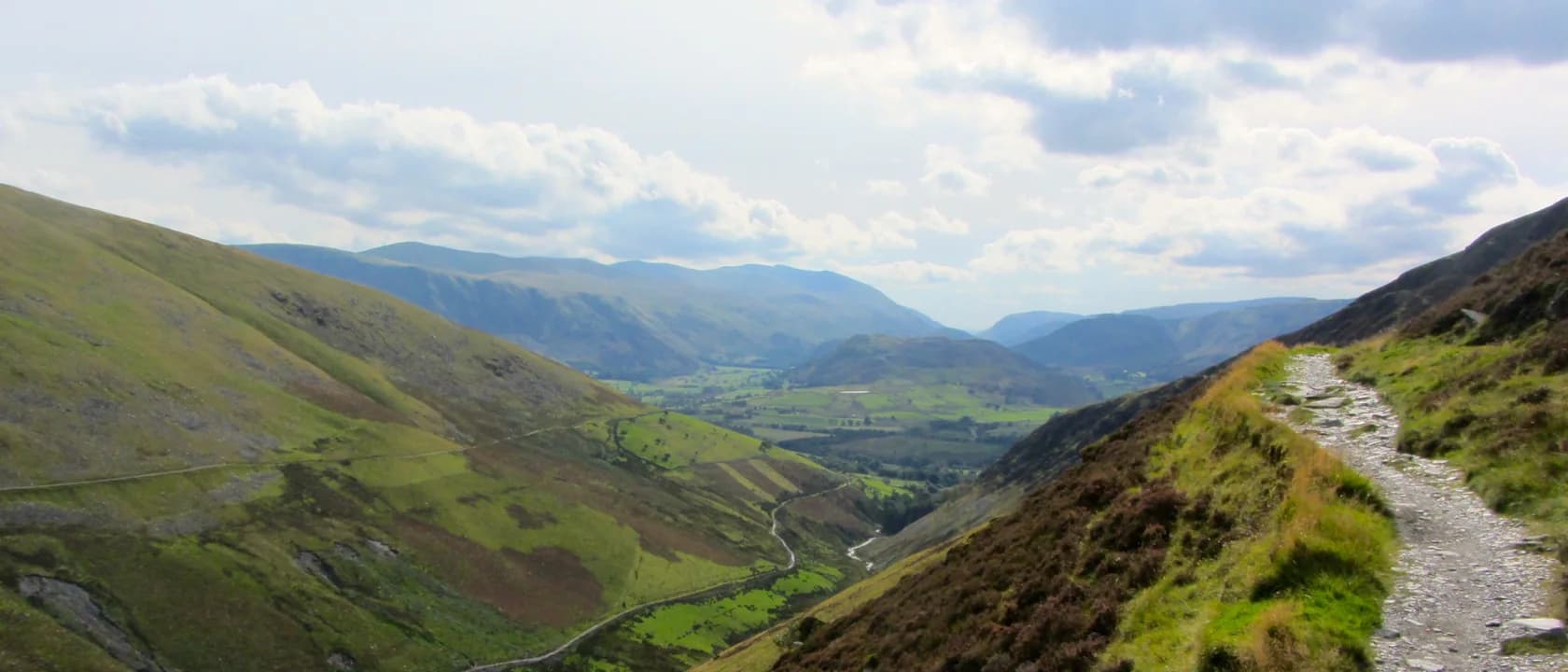
Fell running exists as a distinct sport largely because of this landscape, and the culture that grew up around it here is still what the rest of the country copies: village races off the back of a show field, hand-written entries on the day, no marshals between the top and the bottom, and a strong assumption that you can look after yourself. The fells themselves are the reason. They are steep, wet, trackless in places and descend as fast as they climb, and running on them is a different skill from running anywhere else.
Also known as Lakeland, Lake District National Park.
Lakeland fells are steep for their height. The tops are not high by international standards, but they rise straight out of valleys that are close to sea level, so the gradients are relentless in both directions and there is very little flat ground anywhere. Runners who arrive fit from the road are usually surprised twice: first by how much of the ascent is walked even by good people, and then by how technical the descent is.
Underfoot varies from good stone path to rough grass to bog to loose scree, often within a few minutes. Much of the ground carries no path at all, and the paths that exist are frequently worse than the ground beside them. Wet is the normal condition rather than the exception — this is among the wettest ground in England, and a route that is grass in August is standing water in November.
The fells are also unusually intricate. Ridges branch, spurs look like ridges in cloud, and the valleys radiate in a way that makes a navigational error carry you a long way from where you meant to be. That is a large part of why the sport treats navigation as a core skill rather than a specialism, and why so many people do their first races on ground they already know.
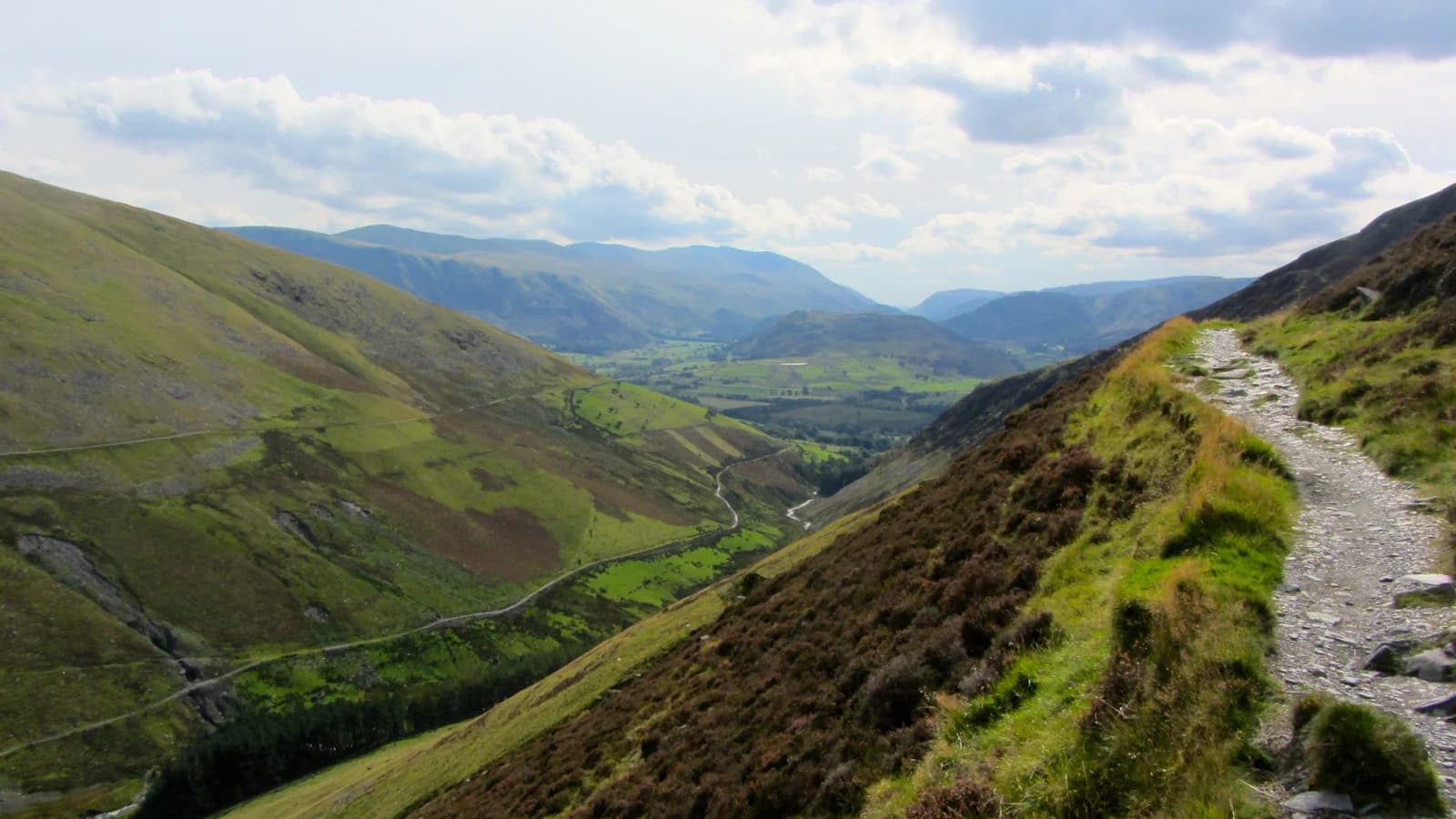
And it is genuinely beautiful in a way that keeps people coming back for decades, which is the part no description manages and the photographs do better.
Most of the high ground is mapped access land under the England-and-Wales framework, giving a right to travel on foot away from paths, with public rights of way through the valleys. Running is walking for these purposes. The right does not extend to camping, cycling or driving, and it can be suspended temporarily by the landowner or the authority.
The Countryside Code sets out what goes with it, and on this ground the provisions about livestock and gates are the live ones: sheep are everywhere, lambing and gathering happen on open fell, and a runner moving quickly past stock is exactly the situation farmers ask people to think about. Dogs are the recurring friction, and many fell races simply do not allow them.
Races themselves operate under the rules of the Fell Runners Association rather than under any public access provision, and organisers hold the necessary permissions for the day. Turning up to run a race route on an ordinary Tuesday is a different legal situation from running it on race day, and it is worth knowing that the two are not the same.
The West Coast Main Line runs along the eastern edge with stations at Oxenholme and Penrith, and the branch to Windermere puts a train into the middle of the southern lakes. The Cumbrian Coast line serves the western valleys, which are the quiet ones. Buses run the main valleys in season and thinly outside it, and the practical constraint on a car is that the popular valley car parks fill very early.
The National Park Authority publishes visitor information and is where anything current lives — path repairs, closures, parking and seasonal notices. Its pages describe a park of over nine hundred square miles, which is worth registering, because the mental image most people have is of a much smaller place.
For the sport specifically, the Fell Runners Association calendar is where races are listed and where the categories are explained, and local clubs are the way most people actually start. Both are live and neither is reproduced here.
It carries no routes, no distances, no ascent figures and no race categories. Fell running is a sport in which those numbers are load-bearing — a race is described by its distance and its climb, and people choose what to enter on exactly that basis — which makes publishing invented ones worse here, not better. HobbyHQ has no authoritative, lawfully reusable source for them, so it publishes none.
It also names no classic round. Those are real things with real followings, and every one of them is a route, which is precisely what this catalogue has no basis to describe. A reader who wants one should go to the people who maintain them.
Nothing here says that any ground is currently safe, passable or suitable for you on the day you read it. Fell running puts people alone on high ground moving fast, often in poor visibility, frequently far from a road, and the sport’s own safety culture — compulsory kit, entry conditions, retirement procedures — exists because of that rather than as bureaucracy.
What this page is for is deciding whether this is the kind of running you want to do, and what you would be running on. For races, for what to carry, and for what a category means, go to the association and to a club.
Who owns the current picture
Anything that changes — closures, conditions, parking, grazing — lives with these, not here.
- Lake District National Park Authority
Visitor information, parking, path repairs and anything current about the park
- The Countryside Code
What is expected of you on access land and rights of way
- Met Office mountain forecast
The forecast for the tops, which is not the forecast for the valley
Worth reading first
From the rest of the catalogue, rather than written again here.
Safety · Fell running
“what goes wrong in fell running”
When it goes wrong on the fells
The incidents in fell running are a short and predictable list, and almost all of them are decisions made an hour earlier rather than accidents.
7 min read
Culture · Wild swimming
“wild swimming etiquette”
Sharing the water: etiquette at an outdoor swim spot
Outdoor swimming spots are almost always somebody else’s place first — a fishery, a farm, a paddling club, a village. Most of what keeps them open is conduct on land rather than in the water.
3 min read
Calculator · Hiking
“How long will this route take me — not an average walker, me?”
Hiking time estimator
A Naismith-style estimate in which both constants are your inputs rather than a Victorian assumption, so it can be calibrated against walks you have actually done.
Gives you Estimated total time, Moving time, Time attributable to ascent
Calculator · Running
“What pace do I need to hold, and what should the clock say at halfway?”
Running pace calculator
Converts a distance and a time into pace per kilometre and per mile, speed, and the even-split halfway time.
Gives you Pace per km, Pace per mile, Speed and more
Other things the same ground is good for
Subjects this catalogue covers that people do on the same hills.
Hiking
SportHobbyWalking longer distances over rougher ground — the cheapest way into the outdoors, and the one whose risks are most underestimated.
£100–£300 to startOutdoorsModerate effort
Trail running
SportOff-road running on unpredictable ground — what actually changes from the road, how the sport divides by surface, and where the boundary with fell running sits.
£100–£300 to startOutdoorsVery demanding
Scrambling
SportAscending steep ground where hands are needed but ropes usually are not — the middle ground between hillwalking and climbing.
£100–£300 to startOutdoorsDemanding
Wild swimming
SportHobbySwimming in rivers, lakes and sea — enormously rewarding, and the one hobby here that regularly kills people who get it wrong.
£25–£100 to startOutdoorsDemanding
- Explore the Lake District National Park — Lake District National Park Authority
- The Countryside Code — Natural England and Natural Resources Wales